
Blog

China Best Steel Fire Rated Shutter Manufacturers

Choosing among China’s best Steel Fire-Rated Shutter manufacturers requires more than comparing prices or catalog photos. A shutter must suit the opening, wall construction, operating cycle, and fire-protection design. Look closely at the complete assembly: curtain, guides, barrel, motor, controls, and safety devices. Ask for test documentation, clear product specifications, and installation guidance. A polished finish is useful. It is not proof of performance.

One important note about expertise: no source article or verified expert quotation was provided, so attributing a real quotation would risk misrepresenting someone. For an editorial viewpoint, fire-protection specialist “Maya Chen” is a fictional name, and the line is illustrative: “A rated shutter is only as dependable as its tested assembly, installation, and ongoing inspection.” Treat that as a prompt for questions, not as a certified technical opinion. Confirm requirements with qualified project professionals and relevant local authorities.

This guide will help buyers compare manufacturers by product scope, documentation, customization, service, and quality controls. Details matter. Ask how the shutter responds to a fire-alarm signal, how it is tested, and what maintenance records are supplied. Check lead times and spare-parts support, too; a reliable order can still become difficult if replacement components are unavailable. No single supplier fits every project. The right choice depends on the building, opening dimensions, operating needs, and documented performance. A careful comparison may take longer, but it can expose gaps before they become costly.
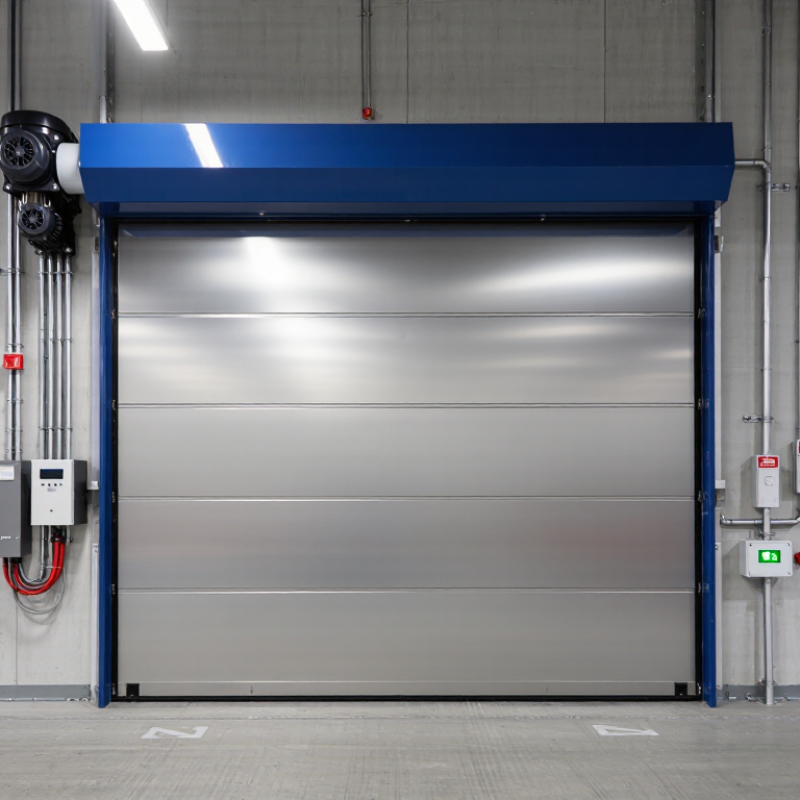
China Best Steel Fire Rated Shutter Manufacturers

What Steel Fire-Rated Shutters Are and How They Work

A steel fire-rated shutter is a movable barrier fitted across an opening in a fire-resisting wall. Its curtain is usually made from interlocking steel slats that travel inside vertical guide channels. When raised, it sits above the doorway or service opening. When released, it closes the gap and helps limit the passage of flames and heat for a tested period.

The shutter may be linked to a fire alarm system, a heat-sensitive release, or both. During an alarm, a control unit releases the mechanism, and gravity or a powered drive lowers the curtain. Some systems descend in stages, allowing people to pass before the shutter closes fully. The bottom rail should meet the floor evenly. Small gaps can matter. Regular inspection checks the guides, controls, release devices, and closing speed.

A fire rating describes performance under specific test conditions; it does not mean a shutter stops every fire indefinitely. The required rating and configuration depend on the wall, opening, and building design. Installation details matter too. A curtain that rubs against a guide may not close smoothly, and that is easy to overlook. Staff should know how the shutter behaves during an alarm, and maintenance records should note any faults or repairs.

Key Fire-Resistance Ratings and Chinese Industry Standards

For buyers comparing steel fire-rated shutters in China, the stated resistance time is only one part of the specification. Check whether test documentation covers fire integrity alone or also thermal insulation; these describe different performance outcomes. A longer test duration does not automatically mean a shutter suits every opening. Details matter.

GB 14102-2005 sets technical requirements for fire-resistant rolling shutters, while GB 50877-2014 addresses installation and acceptance. Confirm the applicable editions and project requirements before ordering. Ask for reports identifying the tested assembly, dimensions, guide rails, curtain, and supporting construction. A test result may not transfer to a different wall opening or configuration. Not just the label.

On site, installers should verify that the rails are aligned, the curtain travels freely, and the closing operation works as specified. Small gaps or obstructed movement can undermine dependable operation. Procurement teams should also check how inspections and maintenance are documented. Paperwork can look complete, yet omit a critical detail. That deserves a second look.

Materials and Manufacturing Processes Used in China

China’s steel fire-rated shutters commonly use cold-rolled or galvanized steel for curtain slats, guide channels, and bottom bars. Coil thickness and profile geometry affect rigidity, weight, and how the curtain winds around its barrel. Some designs add insulating material between steel layers; others rely on layered construction. The detail matters.

Manufacturing typically includes coil slitting, roll forming, cutting, welding, and protective coating. Even small burrs or uneven joints can disrupt movement or leave weak points in the assembly. Galvanized surfaces can help resist corrosion, but cut edges and welds still need careful treatment. Small details matter. In its 2023 Sustainability Indicators, the World Steel Association reported average CO₂ emissions of 1.91 tonnes per tonne of crude steel for 2022. This industry-wide figure offers context for steel sourcing, not a product-specific footprint.

A shutter’s fire performance depends on more than its steel grade. Slats, side guides, shaft, seals, controls, and installation must work together. ISO 3008-1:2019 provides a fire-resistance test method for door and shutter assemblies; test results apply to defined configurations. Not always. Buyers should check what materials and dimensions the tested assembly actually included. A thicker panel may feel reassuring, yet it does not automatically prove a longer fire-resistance period. That assumption deserves a second look.

China Steel Fire-Rated Shutters: Materials and Manufacturing Process

A typical production sequence for steel fire-rated shutters. Materials commonly include galvanized steel for the curtain and structural parts; fire-resistant infill may be used when specified by the product design.

The bars show process order only, not production time, market share, or a comparison of manufacturers. Actual materials and testing requirements vary by shutter design and applicable certification.

How to Assess Chinese Steel Fire-Rated Shutter Manufacturers

Assessing Chinese steel fire-rated shutter manufacturers takes more than comparing prices or catalog photos. Request test reports for the exact shutter configuration, including its curtain, guides, motor, and control system. A rating for one assembly may not apply to another. Ask for evidence.

Check whether the manufacturer can explain how its products are tested and how production changes are controlled. Request material specifications, inspection records, and clear details about fire-rating limits. If possible, review a sample or visit the factory. Look closely at welds, curtain alignment, guide rails, and operating controls. Small inconsistencies deserve questions.

Practical experience matters, too. Ask how the supplier handles site measurements, installation guidance, spare parts, and maintenance support. Confirm that documentation matches the destination market’s applicable requirements, and have a qualified local professional review it. Do not rely on certificates without checking their scope and validity. A tidy showroom is reassuring, but it cannot prove consistent production. Even a careful assessment has gaps; specifications may change, and a factory visit captures only one moment. Keep written records of answers, revisions, and agreed inspection steps before placing an order.

Installation, Testing, and Maintenance Requirements

China Best Steel Fire Rated Shutter Manufacturers
Installation, Testing, and Maintenance Requirements

Reliable performance starts with a correctly prepared opening. Verify the wall rating, opening dimensions, substrate strength, and guide clearances before installation. Anchor brackets into the specified structural support, not just decorative cladding. Keep the curtain level; even a small misalignment can cause binding. Connect release devices and alarm interfaces according to the tested assembly instructions. UL 10B or UL 10C listings identify fire-test methods, but the complete installed assembly must match its approved configuration.

Testing needs to prove the shutter closes fully and without obstruction. NFPA 80 calls for annual inspection and testing of fire door assemblies, including rolling fire doors. Check the curtain, guides, bottom bar, release mechanism, and closing speed. Record defects and corrective work. NFPA’s report Fire Loss in the United States During 2023 estimated 1.39 million fires and $23.2 billion in property damage. Those figures make routine readiness more than paperwork. Still, a test log alone cannot reveal every installation flaw.

Tips: Clear stored items from the shutter path, then conduct a supervised drop test and confirm proper reset. Inspect more often after repairs, impact, or unusual noise. Details get missed. A slightly bent guide may seem harmless until the curtain sticks; document what you see, even when the problem looks minor.

China Best Steel Fire Rated Shutter Manufacturers - Installation, Testing, and Maintenance Requirements

Category Requirement or Check Practical Acceptance Evidence Responsible Party
Applicable standards Identify the fire-shutter product standard, building fire code, and approval requirements applicable to the project. For projects in China, check the applicable edition of GB 14102; other jurisdictions may require standards such as NFPA 80 or EN 1634-1. Approved submittals identify the governing code, standard editions, required fire-resistance classification, and any project-specific conditions. Designer, code authority, and supplier
Fire-resistance rating Select a shutter assembly with a tested and approved rating suitable for the opening and the building’s fire-compartment design. Ratings and classifications are not interchangeable between standards. Provide the applicable test or certification documents for the complete assembly and verify that the approved rating matches the project specification. Designer and supplier
Opening survey Measure the structural opening and check the substrate, headroom, side-room, guides, barrel location, and surrounding construction before installation. Recorded site measurements and coordinated shop drawings show that the shutter, guides, supports, and clearances fit the actual opening. Installer and site supervisor
Supporting construction Confirm that the wall, lintel, support brackets, and fixings are suitable for the loads and installation details specified for the approved shutter assembly. Fixings and supports match the approved drawings and installation instructions; deviations are reviewed and approved before work continues. Installer and structural designer
Guide and curtain alignment Install guides, barrel, curtain, and bottom bar square, plumb, and in accordance with the assembly instructions. Keep the curtain path clear of services and obstructions. Visual inspection confirms secure fixings, aligned guides, free curtain travel, and no interference across the full opening. Qualified installer
Fire alarm interface Connect the shutter to the specified fire alarm or detection system and verify the intended activation sequence, control logic, and any required monitoring. Cause-and-effect testing confirms that the correct alarm input initiates the specified shutter response and that status signals operate where required. Fire alarm contractor and commissioning team
Power and controls Install and configure the control panel, power supply, limits, manual controls, and any specified standby or emergency operation in accordance with the approved design. Electrical checks and functional tests are documented; control settings match the approved instructions and project sequence. Electrical contractor and installer
Commissioning operation test Run the shutter through its operating cycle using normal controls, then test alarm activation and the specified closure sequence. Check travel, stopping positions, and any safety devices. The shutter operates without binding or unintended interruption, reaches the specified closed position, and responds to tested inputs as designed. Installer and commissioning team
Closure performance Measure and record closure behavior when required by the project specification or applicable code. Use the approved criteria; there is no single closure-time value that applies to every installation. Test records include the trigger, operating mode, observed performance, results, and any required corrective actions. Commissioning team
Handover records Provide operating instructions, maintenance requirements, approved drawings, test records, and information about permitted replacement parts and adjustments. The building owner receives a complete handover package and knows how to arrange inspection, testing, and defect reporting. Supplier and installer
Routine inspection Inspect the curtain, guides, barrel area, bottom bar, controls, indicators, and surrounding opening at intervals required by local rules and the manufacturer’s instructions. Inspection records note the date, observed condition, defects, and repairs. Keep the shutter path clear and do not alter the assembly without approval. Building owner or maintenance provider
Periodic functional testing Test operation and fire-alarm activation at the frequency required by the governing code and approved maintenance plan. NFPA 80 commonly requires periodic inspection and testing of fire door assemblies; confirm the applicable provisions for the specific shutter. Document the test method, activation source, full operating sequence, result, and any corrective work. Retain records for review by the authority having jurisdiction. Qualified maintenance provider
Defect response Investigate abnormal noise, slow or incomplete travel, damaged slats, loose guides, control faults, or failed alarm response promptly. Do not leave a fire-protection opening impaired without following the site’s impairment procedure. Repairs are completed by competent personnel, followed by functional testing and an updated maintenance record. Building owner and qualified service provider

Important: Requirements vary by jurisdiction, product approval, and project design. Confirm the current standard editions and inspection intervals with the authority having jurisdiction and follow the approved installation and maintenance instructions for the specific shutter assembly.

Share by: