How to Choose an Electric High Lift Pallet Truck
Choosing an Electric High Lift Pallet Truck requires more than comparing lifting heights and advertised prices. The right machine should match your warehouse layout, load profile, and daily operating rhythm. A truck that performs well in a spacious distribution center may struggle in narrow aisles or crowded loading areas.
Begin by examining the real working conditions. Measure aisle width, floor quality, ramp gradients, and storage heights. Confirm the maximum load weight and its center of gravity. A 1,200-kilogram pallet can behave differently from a compact, evenly balanced load. Battery capacity also matters. If operators move pallets continuously, a small battery may create frequent charging interruptions. That costs time.
Operator safety and control quality deserve close attention. Look for adjustable tiller controls, reliable braking, guarded forks, and clear visibility around the mast. Check whether the lifting speed feels stable with a raised load. A short demonstration can reveal awkward steering, excessive noise, or poor balance. These details often disappear in product brochures.
A dependable selection process uses manufacturer specifications, service records, user feedback, and guidance from qualified equipment professionals. Ask about spare parts, technician response times, battery support, and operator training. The cheapest truck may not deliver the lowest ownership cost. It may consume more energy or require earlier repairs.
No model is perfect. Reassess your assumptions. A heavier capacity rating does not automatically mean better performance. Choose the Electric High Lift Pallet Truck that fits your actual workflow, not an impressive sales description. Record your requirements before requesting quotations. That simple step improves comparison accuracy and supports a safer, more reliable purchase.
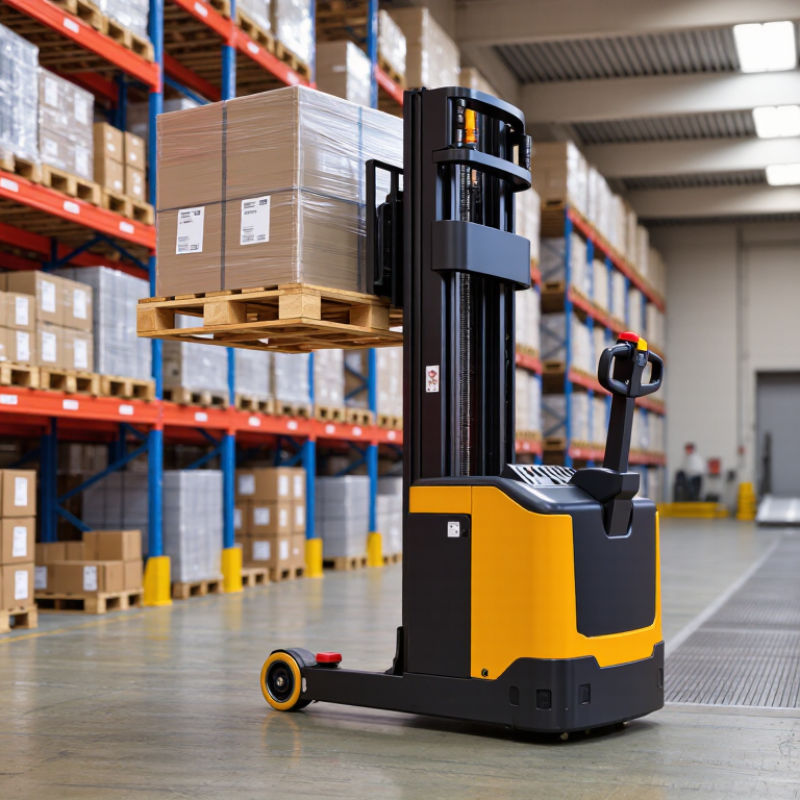
Define the Purpose and Operating Requirements
How to Choose an Electric High Lift Pallet Truck
Define the Purpose and Operating Requirements
Begin with the work, not the truck. Identify whether the equipment will move pallets, raise them for stacking, or support order picking. Record the average and maximum load weights. Include load dimensions, center of gravity, and pallet condition. Measure the required lift height carefully. A few extra centimeters can change stability and access.
Measure the real load. Do not guess.
Check the operating environment in detail. Note aisle widths, door clearances, floor quality, ramps, and storage rack dimensions. Smooth concrete may support regular travel, while uneven surfaces can reduce control and increase wear. Confirm the truck’s turning radius against the narrowest aisle. Also consider shift length, daily travel distance, charging access, and indoor ventilation requirements.
Think about the operator’s routine. Frequent short movements may require different performance than long warehouse routes. Review controls, visibility, braking, and emergency functions during a practical trial. Training needs should be realistic, not based only on a specification sheet. A competent supervisor should compare the selected capacity with the actual load profile and documented risk assessment.
A common mistake is choosing maximum lift height first. That can add cost and reduce useful capacity. Another is ignoring occasional oversized pallets. They often create the hardest operating condition. Recheck measurements with the people who use the equipment every day. Their feedback may expose a blind spot in the original plan.
How to Choose an Electric High Lift Pallet Truck
Define the purpose and operating requirements before selecting lift height, capacity, aisle compatibility, and battery performance.
Lift height Select a rated lift height that exceeds the highest rack or staging position, allowing clearance for the pallet and load.
Load capacity Confirm the truck’s rated capacity at the required lift height. Capacity generally decreases as the load is raised higher.
Operating space Check aisle width, turning space, floor condition, travel distance, and duty cycle before choosing the truck configuration.
Evaluate Battery Type, Power System, and Charging Needs
Choosing an electric high lift pallet truck starts with the battery, not the lifting height. Battery chemistry affects runtime, weight, maintenance, and charging speed. Lead-acid batteries usually cost less and suit planned shifts with dedicated charging areas. They need ventilation, watering, and regular inspection. Lithium-ion batteries support opportunity charging during short breaks. They usually require less routine maintenance, but their higher purchase cost needs careful calculation.
Match the power system to your floor, load, and working rhythm. A truck moving light pallets across smooth concrete may need less motor power than one climbing ramps repeatedly. Check rated capacity at the required lift height, not only the headline capacity. During warehouse trials, observe acceleration, braking, steering response, and battery drop under load. Small differences become obvious after several hours. I once underestimated travel distance between storage zones, and the selected battery needed charging before the shift ended.
Charging needs deserve a written schedule. Measure daily operating hours, break times, charger location, and spare battery availability. A fast charger may reduce downtime, but it can increase heat and demand suitable electrical infrastructure. Follow the battery and charger manufacturer’s instructions, and keep charging areas clean, dry, and unobstructed. Do not assume a larger battery is always better. It may add weight, reduce maneuverability, and change floor pressure. Record energy use for several weeks, then compare actual performance with the original estimate. The first calculation may be wrong. That is useful data.
Assess Maintenance, Total Cost, and Supplier Support
Choosing an electric high lift pallet truck requires more than checking lift height and load capacity. Maintenance access can strongly affect daily productivity. Inspect the battery compartment, drive wheels, forks, mast rollers, and hydraulic connections. Technicians should reach routine service points without removing half the machine.
Ask for clear maintenance intervals and expected replacement parts. Confirm whether batteries, chargers, sensors, and control components are locally available. Keep records. Small delays matter. A truck that performs well during a showroom demonstration may become expensive when minor faults stop a busy aisle. I have seen evaluations focus too heavily on purchase price and overlook service labor. That approach needs reconsideration.
Calculate total cost across several years. Include electricity use, battery replacement, tires, scheduled servicing, operator training, and possible downtime. Ask the supplier for a written cost estimate based on your working hours and load pattern. A cheaper quotation can hide costly exclusions. Supplier support should include practical training, diagnostic help, warranty terms, and defined response times. Ask who handles urgent repairs and whether technicians can visit your facility. Test a loaded truck before ordering. Listen for unusual mast noise, delayed lifting, or uneven braking. Do not accept vague promises. The best choice may not be the cheapest truck; it is the one your team can maintain reliably.

Share On: