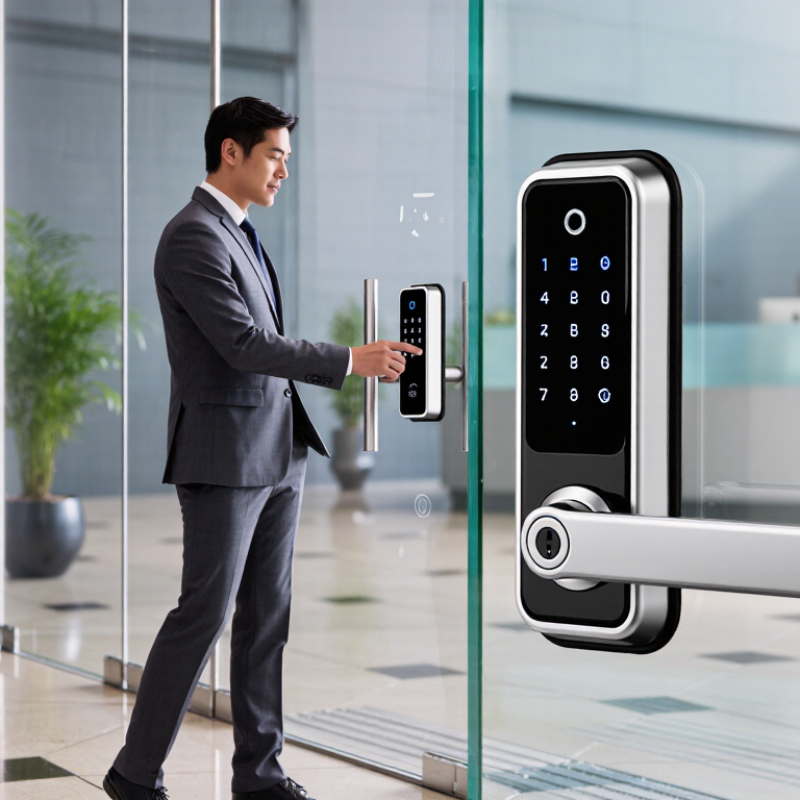
| Electronic Lever Lock | Office doors, classrooms, staff-only rooms, and interior commercial areas. | May connect through a wired controller, wireless gateway, or access-control platform. Confirm support for scheduled permissions, audit logs, and remote administration. | Usually replaces an existing lever lock. Verify door handing, latch dimensions, backset, door thickness, and clearance around the lever. | Check the existing mortise or cylindrical preparation, fire-rating requirements, and whether the door is listed for the selected hardware. | Battery-powered or low-voltage wired. | Good for controlled employee access; battery alerts and mechanical key override should be available where required. |
| Electronic Mortise Lock | Main entrances, offices requiring stronger latching, hotels, healthcare areas, and high-use commercial doors. | Best suited to centralized access-control systems with event reporting, role-based permissions, and optional request-to-exit monitoring. | Requires a compatible mortise pocket and accurate door preparation. Professional installation is recommended for alignment and latch adjustment. | Confirm mortise case dimensions, spindle position, door thickness, frame alignment, and compatibility with existing cylinders or thumb turns. | Battery-powered or low-voltage wired. | Provides integrated latch and lever hardware, but installation tolerances are more demanding than retrofit locks. |
| Electric Strike | Existing cylindrical lock or mortise lock openings where the business wants controlled entry without replacing the door lock body. | Requires a compatible access controller, credential reader, exit device, door-position sensor, and a suitable power supply. | Installed in the door frame. The frame must have enough space and strength for the strike body, wiring, and faceplate. | Check latch shape, frame material, lock type, voltage, current draw, fail-safe or fail-secure configuration, and fire-door approval. | Normally low-voltage wired. | Useful for retrofit projects; correct fire and egress configuration must be confirmed before installation. |
| Electric Exit Device | Emergency exits, corridors, warehouses, retail back doors, and wide commercial doors. | Can integrate with access controllers, fire-alarm interfaces, door-position sensors, and request-to-exit devices. | Requires correct device length, mounting height, door width, end-cap clearance, and power-transfer hardware for moving doors. | Check single or double-door configuration, rim or mortise style, fire-rating, panic-hardware rules, and exterior trim compatibility. | Low-voltage wired or battery-assisted, depending on configuration. | Life-safety compliance is critical; access control must not prevent required emergency egress. |
| Wireless Cylindrical Lock | Multi-room offices, small branches, clinics, and facilities where cabling is difficult or disruptive. | Requires a compatible wireless gateway or hub if remote management, centralized audit logs, or automatic updates are needed. | Generally retrofit-friendly, but accurate door measurements and reliable wireless coverage are still required. | Verify lock bore, backset, door thickness, lever handing, cylinder format, and wireless protocol supported by the management system. | Battery-powered. | Plan for battery replacement, radio coverage testing, and offline operation if the network becomes unavailable. |
| Smart Padlock | Gates, storage cages, equipment rooms, temporary sites, and non-egress assets. | May use Bluetooth, cellular, or a gateway-based platform for user assignment, activity records, and remote status checks. | No door preparation is normally required, but the shackle must fit the hasp and provide adequate clearance for operation. | Check shackle diameter, opening height, weather exposure, corrosion resistance, operating temperature, and network availability. | Battery-powered. | Not generally suitable for required building exits or doors that need continuous life-safety hardware. |
| Interconnected Smart Lock | Small offices, rental workspaces, and low-volume commercial rooms with a deadbolt and latch operated together. | Commonly supports mobile credentials, keypad entry, or a remote gateway. Confirm user limits, audit-log retention, and administrator controls. | Requires compatible deadbolt spacing, door thickness, interior clearance, and correct alignment between the latch and strike. | Check bore locations, deadbolt type, strike dimensions, door swing, and whether the door is fire-rated or part of a required egress route. | Battery-powered. | Simple to deploy, but it may offer fewer access-control functions than commercial mortise or wired systems. |

Share On: