How to Choose the Best Office Furniture Store
Choosing the right Office Furniture Store is about more than finding a desk that looks good online. The furniture should fit your space, support daily work, and arrive when you need it. A compact office may need a narrow desk and vertical storage, while a shared workspace calls for durable chairs and easy-to-clean surfaces. Measure doorways, desk areas, and walkways before comparing products. Small details count.
A reliable store makes those comparisons easier. Look for clear dimensions, material descriptions, delivery terms, return policies, and warranty information. Ask whether you can test chairs in person, and check how the store handles assembly or damaged items. These practical details reveal more than polished product photos. They can also prevent costly surprises.
Price matters, but the lowest quote may not reflect long-term value. A chair that feels comfortable for five minutes may not suit a full workday. I would not treat any checklist as perfect, either; teams use furniture differently, and needs change. Still, comparing specifications and asking direct questions gives you a sound starting point. The best choice is the store that communicates clearly, offers suitable options, and helps you make a decision you can stand behind.
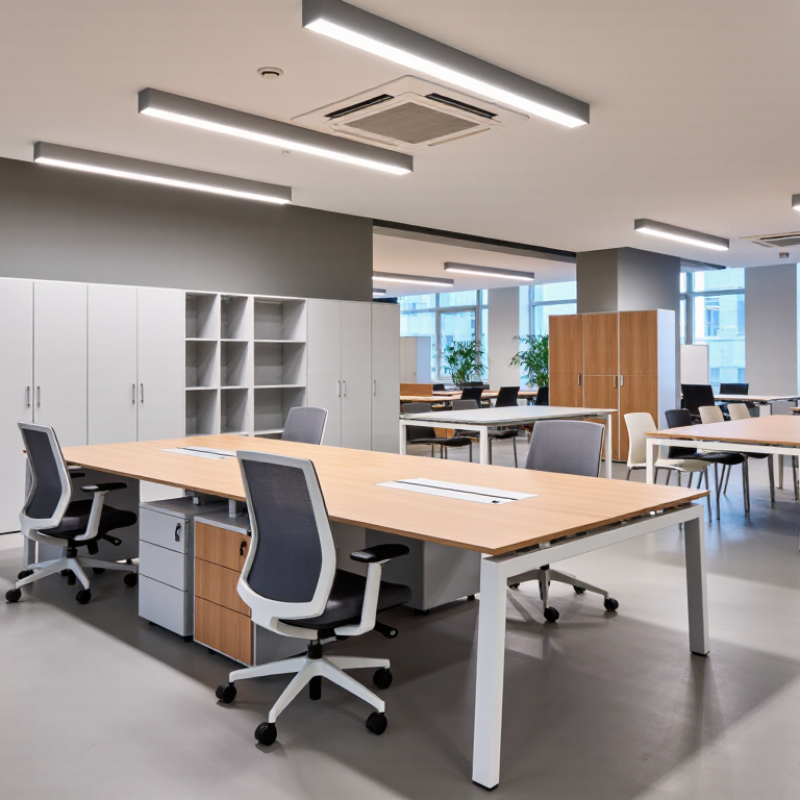
Define Workspace Needs, Headcount, and Budget Before Comparing Stores
Before comparing office furniture stores, define the work your space must support. List roles, tasks, storage needs, and accessibility requirements. A quiet analyst may need a different desk setup than a team that meets around shared tables. Count seats for the busiest in-office day, not just total payroll. Start with real use.
The U.S. Census Bureau’s 2023 American Community Survey found that 13.8% of U.S. workers worked from home. Treat that national figure as context, not a forecast for your team. Review badge records or conduct a short attendance survey to estimate peak occupancy. I would still question the estimate: seasonal projects can make an average misleading. Gensler Research Institute’s 2024 Global Workplace Survey reports that employees with choice over where and when they work are 2.5 times more likely to be highly productive. That finding supports planning flexible settings, rather than buying one identical workstation for every employee.
Set a budget after choosing quantities and priorities. Include delivery, assembly, installation, warranties, and likely replacement costs; the lowest unit price may not be the lowest total cost. Note which items need ergonomic adjustment, such as chairs with adjustable seat height and lumbar support. Then ask each store for a written quote using the same item list and delivery assumptions. Compare like with like.
Assess Chair Options Against ANSI/BIFMA X5.1 Performance Standards
When comparing office chairs, look beyond upholstery and showroom comfort. ANSI/BIFMA X5.1 is a performance standard for general-purpose office chairs. It evaluates areas such as stability, strength, and durability through defined tests. Ask whether the specific chair model was tested and request documentation identifying its configuration. A vague “commercial grade” claim is not enough. Details matter.
Check which features the test results cover. Chairs with arms may require relevant arm-strength testing, and changes to a chair’s configuration can affect what the results apply to. Confirm that the model you plan to order matches the tested version, including its base and mechanisms. If available, review results from a qualified independent laboratory. Testing provides useful evidence, but it cannot prove that a chair fits every body or workspace.
Then inspect the chair yourself. Sit for several minutes, adjust the seat height, and check that your feet rest flat while your back feels supported. Roll the chair across your actual floor surface if possible. Ask about replacement parts and warranty terms, too. A test report cannot tell you whether the seat edge presses behind your knees. Easy to overlook. Pair documented performance with a careful fit check before choosing among a store’s chair options.
Check Desks and Storage Against ANSI/BIFMA X5.5 Standards
When choosing an office furniture store, look beyond polished displays. A desk should feel steady when you lean lightly on its edge, and its drawers should slide without catching. Ask whether the exact desk model has been tested to ANSI/BIFMA X5.5, the standard for desk and table products. Small details matter.
Request documentation that identifies the model, standard edition, and testing organization. X5.5 evaluates performance under defined tests, but it cannot predict every room, load, or pattern of daily use. Check the desk’s stated weight limits and inspect joints, feet, and cable openings in person. One detail is easy to miss: standalone storage units are generally assessed under a separate storage standard, ANSI/BIFMA X5.9, rather than X5.5. Ask the store to clarify which standard applies to each item.
Tips: Open and close every drawer. Check that cabinet doors stay aligned and shelves sit firmly on their supports. Bring your monitor and storage needs into the comparison; a passed test does not guarantee the furniture fits your workflow. I might still overlook a small wobble in a busy showroom, so take your time.
Compare Quotes, Delivery Terms, Installation, and Warranty Coverage
Choosing an office furniture store means comparing more than the grand total. Ask for an itemized quote showing each desk, chair, delivery fee, and installation charge. A low price may exclude stairs, packaging removal, or assembly. Compare the same quantities and materials across quotes. Otherwise, the numbers can mislead.
Delivery terms deserve close attention. Confirm the estimated arrival window, who receives the shipment, and what happens if a truck cannot reach the loading area. A narrow hallway or a busy reception desk can complicate delivery. Small details matter. For installation, ask whether crews level desks, connect modular pieces, and remove cartons. Get the scope and any extra fees in writing. I might focus too much on price at first; timing can matter more when staff need working desks on Monday.
Read the warranty before ordering, not after a chair squeaks. Check coverage periods for frames, fabric, moving parts, and labor. Ask how to report damage, what proof is required, and whether replacement parts take weeks. A clear warranty is useful, but exclusions still count. Keep the quote, delivery notes, and warranty terms together, and verify that the final order matches them.
How to Choose the Best Office Furniture Store
Compare quotes, delivery terms, installation, and warranty coverage using a consistent checklist.
Suggested evaluation weights—not survey results. Compare itemized quotes for equivalent products, check delivery fees and timelines, confirm what installation includes, and review warranty duration and exclusions.
Verify Sustainability Claims and Furniture End-of-Life Policies
When comparing office furniture stores, treat sustainability claims like product specifications: ask what materials are recycled, how much, and who verified them. The U.S. EPA’s 2018 Advancing Sustainable Materials Management report estimated that 12.1 million tons of furniture and furnishings entered the municipal solid waste stream. About 9.4 million tons were landfilled, a reminder that end-of-life plans matter as much as recycled-content labels.
Ask for proof. Request product-level material details, third-party certifications, and written take-back or refurbishment terms before ordering. A vague promise to “recycle” is not enough; ask who collects the furniture, where it goes, and whether fees apply.
Check the fine print for pickup limits, minimum quantities, removal charges, and rules for damaged or mixed-material pieces. EPA’s figures describe the U.S. overall, not any individual store, so use them as context rather than a scorecard.
Not just a logo. A credible seller should provide dated documents, explain exclusions plainly, and describe realistic options such as resale, parts recovery, or material recycling. I would still contact the stated recovery partner to confirm the process; paperwork can look reassuring while logistics remain unclear. That extra check may feel fussy, but it can prevent desks and chairs from becoming an unexpected disposal bill.

Share On: