10 Tips for Choosing an Aluminum Composite Panel Factory
Choosing an Aluminum Composite Panel Factory can shape a project’s safety, appearance, cost, and delivery schedule. These panels may cover office towers, retail signs, airports, and residential façades. Their performance depends on more than surface color or attractive samples.
A capable factory should show consistent core quality, accurate panel dimensions, stable coating performance, and documented fire-test results. It should also explain its production process in clear language. Factory experience matters when projects require unusual sizes, curved panels, strict color matching, or complex packaging. Buyers should request current certifications, laboratory reports, production photos, and references from comparable projects. A reliable manufacturer will answer specific questions without hiding behind vague promises.
Small details matter. Check the protective film, corner protection, flatness, and carton labels. Ask how the factory handles rejected panels, replacement orders, and delayed shipments. Confirm whether warranties cover coating defects, delamination, and color changes. Price deserves attention, but the lowest quotation may conceal thinner aluminum skins, weaker cores, or limited after-sales support.
This guide presents ten practical tips for comparing factories with greater confidence. It considers production capacity, technical expertise, quality control, customization, communication, lead times, packaging, sustainability, and total project value. No supplier is perfect. That limitation deserves attention. A single visit cannot reveal every weakness, and polished marketing can still mislead. Careful buyers combine documents, samples, factory evidence, and written commitments before making a decision. The goal is not simply to find a cheap supplier. It is to identify a dependable partner whose panels perform as promised in real conditions.
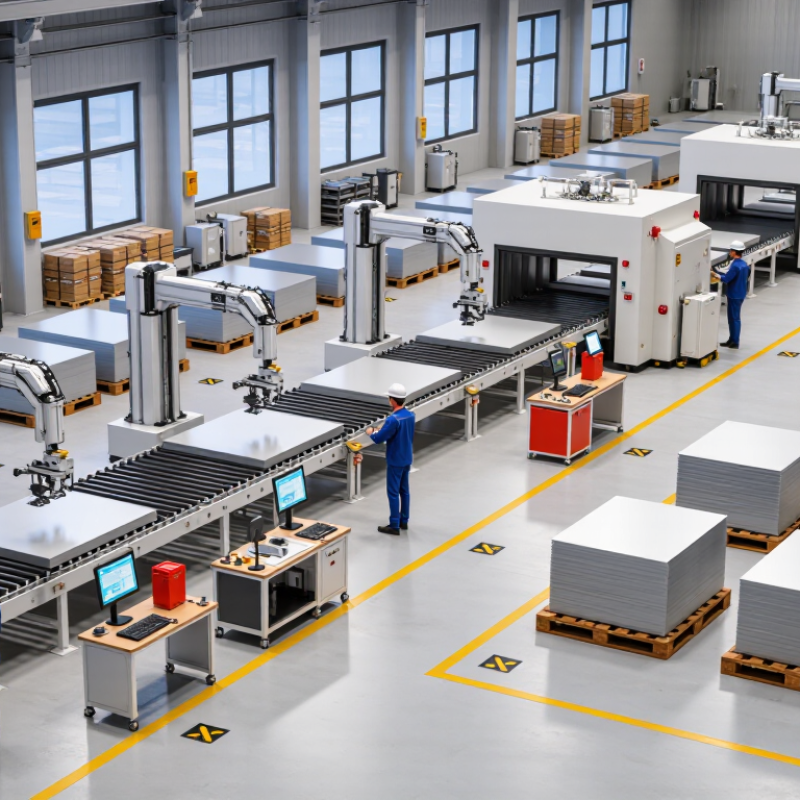
Understanding Your Aluminum Composite Panel Requirements
Before comparing factories, define the panel’s actual job. Is it exterior cladding, signage, partitions, or interior lining? Each use changes the required core, surface finish, thickness, and fixing method.
I have seen projects fail because appearance was approved before wind loads were checked. Start with drawings, not color cards. Record panel dimensions, joint widths, corner details, and expected quantity.
Small details matter.
Your site conditions deserve equal attention. Coastal air, heavy rain, strong sunlight, and industrial dust can age finishes differently.
Ask for coating data, color tolerance, weathering evidence, and cleaning guidance. Fire performance must match the building’s design and applicable requirements.
Request current test reports, not vague claims. Check whether reports apply to the exact panel construction. They often do not.
Also confirm flatness, thickness tolerance, and protective film quality. A cheap sample may hide production variation.
Talk with the factory’s technical team before ordering. Can they review shop drawings, make a corner mock-up, and explain quality checks?
Ask how they control alloy, core bonding, coating thickness, and batch consistency. Visit production if practical, and inspect finished panels under angled light.
I once trusted a clean sample and overlooked a difficult installation detail. That mistake taught me to test full-size assemblies.
Leave room for honest uncertainty. A supplier that documents limitations may be more reliable than one promising everything.
Comparing Customization Options, Quality Control, and Testing Procedures
Choosing an aluminum composite panel factory requires more than comparing prices. Customization should begin with your project drawings, not a standard catalog. Ask whether the factory can adjust panel thickness, core type, surface finish, color, and edge treatment. Small details matter. A reliable team should provide physical samples and clear dimensional tolerances before production.
Quality control must be visible at every stage. Inspect incoming aluminum coils, coating thickness, adhesive coverage, and panel flatness. Request batch records with dates, material sources, and operator checks. Experienced factories should explain how they prevent color variation between production runs. A polished sample can mislead. I have seen attractive panels fail because their protective film lifted at the corners.
Testing procedures reveal technical confidence. Ask for results covering peel strength, impact resistance, bending performance, weathering, and fire behavior. Independent laboratory reports are more useful when they identify the exact panel structure tested. Confirm that the report matches your requested core and surface finish. Do not rush. Factory visits can expose uneven storage, dusty cutting areas, or poorly labeled samples. These signs do not prove failure, but they deserve questions. One practical weakness remains: many buyers review certificates but neglect installation conditions. Discuss cutting tools, joint spacing, handling, and climate exposure with the factory’s technical staff. Reliable cooperation continues after delivery.

Share On: