
Choosing a reliable Stainless Steel Plate Manufacturer is not a simple ranking exercise. It requires closer attention to grade control, production scale, and documented quality systems. A bright plate may look excellent, yet surface appearance alone cannot confirm its performance.
Edwin Basson, Director General of worldstainless, describes stainless steel as “a sustainable material by design.” That principle matters when comparing manufacturers worldwide. Strong suppliers usually provide traceable heat numbers, mill test certificates, and clear information about chemical composition. They also understand how 304, 316L, duplex, and heat-resistant grades behave in real environments.
Performance depends on details.
A plate used near seawater faces different risks from one installed in a food-processing room. Chlorides, welding practices, thickness tolerance, and finishing methods can influence service life. The best manufacturers combine modern rolling equipment with disciplined inspection, including ultrasonic testing, dimensional checks, and surface examination. Their technical teams should explain these processes without hiding behind vague promises.
This guide examines ten leading manufacturers through practical criteria: product range, production capacity, certifications, delivery reach, research strength, and customer support. It also considers less visible factors, such as consistency between batches and the manufacturer’s ability to solve unusual fabrication problems.
No ranking is perfect.
Market data changes, regional strengths differ, and a large producer is not always the best fit for a specialized project. Some information may also depend on public disclosures rather than independent audits. Readers should verify current certificates, plant capabilities, and delivery terms before making a purchasing decision. The following manufacturers offer a useful starting point for that deeper evaluation.
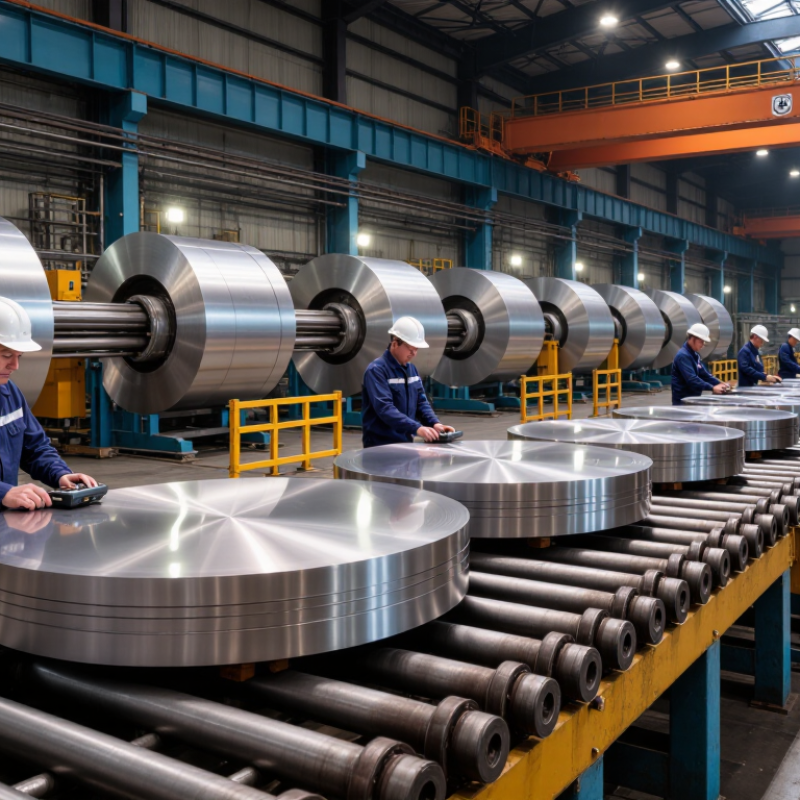
Stainless steel plate is a flat-rolled product made from iron, chromium, and selected alloying elements. Under EN 10088-1, stainless steel contains at least 10.5% chromium. That chromium forms a passive surface film. It helps resist corrosion. World Stainless reported approximately 58.4 million tonnes of global stainless crude steel production in 2023. The figure shows strong industrial demand, but plate quality still depends on processing control.
Manufacturing usually includes melting, refining, continuous casting, hot rolling, annealing, pickling, and inspection. Cold rolling may improve thickness accuracy and surface finish. Common grades include 304 for general processing equipment, 316 for chloride exposure, and 430 for decorative or lower-corrosion environments. ASTM A240 provides widely used requirements for stainless plate, sheet, and strip. USGS Mineral Commodity Summaries 2024 also identifies chromium as a strategically important alloying material.
Applications are highly practical. Plate becomes pressure vessels, food tanks, bridge components, desalination equipment, and architectural panels. Grade selection needs more than a corrosion label. Temperature, weld design, surface finish, and cleaning chemicals matter. A 316 plate can still suffer localized corrosion in severe conditions. That is an uncomfortable detail. Thickness tolerances and mill certificates also deserve independent review, because attractive test data cannot correct poor fabrication.
Stainless steel plate is a flat-rolled iron-based product containing at least 10.5% chromium by mass. Manufacturing generally includes melting, refining, continuous casting, hot rolling, heat treatment, pickling, and optional cold rolling or surface finishing.
The chart shows typical specified chromium and nickel composition ranges by mass for widely used stainless steel plate grades. Actual limits can vary slightly according to the applicable standard, product form, and grade designation. Reference frameworks include ASTM A240 and EN 10088.
A credible ranking begins with measurable production capability. The International Stainless Steel Forum reported global stainless steel crude production of about 58.4 million tonnes in 2023. However, total volume alone is not enough. We assess plate capacity, thickness ranges, surface finishes, and heat-treatment control. Independent certifications, mill test reports, and traceability records also matter. A strong manufacturer can identify the heat number behind every delivered plate.
Quality performance receives equal weight. We examine rejection rates, corrective-action records, laboratory capabilities, and compliance with ASTM, EN, or JIS standards. Third-party audits provide stronger evidence than promotional claims. Customer delivery data also reveals practical reliability. On-time shipment rates, packaging quality, and response speed should be reviewed across several years. One excellent project cannot prove consistent performance.
Sustainability is now part of industrial competence. The World Steel Association reported that steel production remains highly energy intensive, making emissions data relevant to supplier selection. We therefore compare reported carbon intensity, recycled content, renewable electricity use, water management, and environmental verification. Financial resilience, regional service centers, and technical support complete the assessment. No ranking model is flawless. Public data can be incomplete, and some suppliers disclose very little. That limitation deserves a clear penalty, not a convenient assumption. A lower-ranked producer may still suit a specialized buyer better. The final list should guide due diligence, not replace it.
Global Overview of the Top 10 Stainless Steel Plate Manufacturers
The global top ten stainless steel plate manufacturers operate across Asia, Europe, and North America. Their strength comes from integrated melting, hot rolling, finishing, and export networks. According to the International Stainless Steel Forum, global stainless crude steel production reached about 58.4 million tonnes in 2023. This volume supports demand from construction, food processing, transport, energy, and chemical equipment.
Scale is important, but it does not tell the whole story. The World Steel Association reported global crude steel production of approximately 1.89 billion tonnes in 2023. Stainless steel represents a smaller, higher-value segment. Leading plate producers therefore compete through thickness control, surface quality, corrosion resistance, and delivery reliability. Many facilities also serve demanding standards, including ASTM, EN, and JIS requirements.
Trade data offers another useful view. UN Comtrade records show strong international movement of flat stainless products, especially across Asian and European supply chains. However, rankings can change with exchange rates, plant expansions, and reporting methods. Data can mislead. Some producers report group capacity, while others disclose only operating mills. A fair comparison should examine annual output, plate width, alloy range, certification, and regional service centers. Buyers often discover that the largest producer is not always the best fit for a small, urgent order. The ranking remains useful, but it needs careful interpretation.
The top ten stainless steel plate manufacturers differ in product range, plant scale, and quality systems. Most supply austenitic grades such as 304 and 316L for food, chemical, and architectural use. Several also produce duplex, ferritic, and heat-resistant plates for pressure vessels, marine equipment, and energy projects. Buyers should compare thickness ranges, plate widths, surface finishes, and cutting tolerances, not only advertised prices.
Production capacity often separates large integrated mills from specialist processors. Major facilities may produce hundreds of thousands of tonnes annually, while smaller plants focus on custom dimensions and short production runs. Useful profile data includes melting capacity, rolling-line capability, furnace size, and monthly dispatch performance. These details reveal practical supply strength. Capacity figures can mislead. Some reports describe theoretical output rather than verified production.
Reliable manufacturers usually maintain ISO 9001 quality certification and may hold ISO 14001 environmental or ISO 45001 safety certification. Pressure equipment suppliers can also provide approvals aligned with PED, ASME, ASTM, or EN requirements. Material test certificates should identify heat numbers, chemical composition, tensile results, and ultrasonic inspection records. Check them carefully. A certificate alone does not guarantee consistent delivery. Independent audits, sample testing, and traceable inspection records provide stronger evidence. Even experienced buyers sometimes overlook packaging quality, which can leave clean plates scratched or stained during ocean transport.
Top 10 Stainless Steel Plate Manufacturers Worldwide
Quality, technology, markets, and sustainability separate leading stainless steel plate manufacturers. Quality begins with chemistry control, surface finish, thickness tolerance, and corrosion resistance. Independent laboratories often verify tensile strength, impact performance, and ultrasonic soundness. ASTM A240 and EN 10088 remain useful reference standards. Yet certificates alone cannot reveal every production weakness.
The International Stainless Steel Forum reported global stainless steel production of approximately 58.4 million tonnes in 2023. Asian mills held the largest production share, while Europe and North America remained important for specialized grades. Advanced producers use AOD or VOD refining, continuous casting, automated rolling, and laser thickness monitoring. Digital heat tracking also improves traceability. Market fit matters. Energy, construction, food processing, transport, and chemical equipment require different plate grades and finishes.
Tips: Compare actual test reports, not only brochures. Request recent mill certificates, surface photographs, and independent inspection records. Ask how rejected plates are handled. Small details matter.
Sustainability now influences purchasing decisions. The International Energy Agency estimates that iron and steel production creates about 7% of global energy-related emissions. Stronger manufacturers measure electricity, fuel, water, scrap recovery, and scope 1 and 2 emissions. Stainless steel’s long service life and recyclability support circular production, but recovery rates differ across markets. A low-carbon claim may still lack boundaries or verified data. No ranking is perfect. Buyers should question recycled-content percentages, environmental product declarations, renewable-energy claims, and supplier audits before comparing the top ten.
| Rank | Producer Profile | Quality and Product Capability | Manufacturing Technology | Primary Market Reach | Sustainability Practices | Overall Assessment |
|---|---|---|---|---|---|---|
| 1 | Global integrated producer A | Broad stainless plate portfolio covering austenitic, ferritic, martensitic, duplex, and heat-resistant grades; products are commonly supplied to ASTM, EN, and JIS requirements. | Integrated steelmaking, continuous casting, hot rolling, heat treatment, pickling, precision leveling, and automated surface inspection. | Strong presence across construction, energy, chemical processing, food equipment, transportation, and heavy engineering markets. | Uses electric-arc-furnace and converter-based production routes, scrap recycling, process-water recycling, and published greenhouse-gas reduction programs. | Very strong global capability |
| 2 | Global integrated producer B | High consistency in corrosion-resistant and low-temperature grades, with plate traceability and third-party inspection available for demanding applications. | Large-scale hot-strip and heavy-plate mills supported by automated gauge control, controlled rolling, and advanced non-destructive testing. | Well established in Europe, Asia, North America, the Middle East, and marine-related supply chains. | Reports energy-efficiency projects, increased use of recycled steel, waste-heat recovery, and reductions in direct process emissions. | Very strong global capability |
| 3 | Large regional producer C | Reliable production of standard austenitic and ferritic plate grades, with selected duplex and high-temperature products for industrial use. | Modern melting and refining equipment, controlled hot rolling, online thickness measurement, and automated finishing lines. | Strong domestic sales base with regular exports to nearby Asian, Middle Eastern, and African markets. | Uses high recycled-metal input where available, closed-loop cooling systems, by-product recovery, and certified environmental-management systems. | Strong regional competitiveness |
| 4 | European specialty producer D | Recognized for high-quality plate used in chemical processing, pressure equipment, food processing, and architectural applications. | Specialized refining, vacuum treatment for selected grades, controlled rolling, bright or mechanically finished surfaces, and strict dimensional control. | Concentrated in Europe but serves global engineering, process-equipment, and premium fabrication customers. | Strong environmental compliance, renewable-electricity procurement, material-efficiency programs, and transparent product declarations for selected products. | High specification and finish capability |
| 5 | Integrated producer E | Wide range of commercial and industrial stainless plate, including commonly used 300-series and 400-series grades. | High-volume melting, continuous casting, hot rolling, annealing and pickling, edge trimming, and warehouse-based cut-to-size services. | Broad distribution network serving infrastructure, appliances, fabrication, transportation, and general industry. | Improves resource efficiency through scrap recovery, wastewater treatment, acid regeneration, and energy-monitoring systems. | Balanced scale and availability |
| 6 | Specialist producer F | Focused on duplex, super-duplex, precipitation-hardening, and other performance-oriented grades requiring tight chemistry control. | Uses secondary metallurgy, controlled solidification, specialized heat treatment, ultrasonic testing, and detailed mill-certification systems. | Serves oil and gas, desalination, offshore, chemical, and high-pressure equipment projects worldwide. | Emphasizes longer service life, reduced replacement frequency, process-water management, and recovery of alloying elements from production waste. | Strong technical specialization |
| 7 | Asian export producer G | Competitive supply of standard austenitic, ferritic, and decorative stainless plate with documentation for international buyers. | Large hot-rolling capacity, automated pickling and annealing, surface finishing, laser measurement, and digital production scheduling. | High export orientation, particularly across Asia, the Middle East, Africa, and Latin America. | Adopts energy-saving drives, acid recovery, wastewater treatment, scrap segregation, and ISO 14001-style environmental controls. | Strong value and export capacity |
| 8 | North American producer H | Supplies plate for energy, transportation, food, architecture, and industrial fabrication, with strong compliance documentation. | Electric-arc-furnace melting, continuous casting, hot rolling, annealing, pickling, leveling, and extensive testing for domestic specifications. | Primarily North American with established service-center and project-supply channels. | High recycled-steel utilization is typical of the electric-arc-furnace route; initiatives also include renewable power, water reuse, and landfill-diversion programs. | Strong regional supply reliability |
| 9 | Specialized producer I | Offers precision plate and sheet products for architectural, sanitary, food-processing, and engineered applications with demanding surface requirements. | Precision finishing, surface grinding or polishing, automated inspection, customized slitting or cutting, and batch-level traceability. | Serves premium fabrication and architectural markets through regional distributors and project contractors. | Focuses on reduced material loss, recyclable packaging, water filtration, chemical-use reduction, and extended product durability. | Strong finishing and customization |
| 10 | Emerging integrated producer J | Expanding range of standard stainless plate grades, with improving consistency, documentation, and export certification. | Newer melting, casting, hot-rolling, annealing, and finishing equipment; digital process monitoring is increasingly integrated. | Growing presence in domestic infrastructure and international project markets, especially in cost-sensitive regions. | Developing formal carbon-accounting systems, improved dust and wastewater controls, scrap recovery, and energy-efficiency projects. | Growing international capability |
Assessment basis: The comparison uses publicly documented industry criteria, including product breadth, compliance with recognized standards, process sophistication, geographic distribution, recycling practices, water management, energy efficiency, and greenhouse-gas reporting. The ranking is a comparative editorial benchmark rather than a certified market-share ranking.
Relevant reference frameworks: ASTM A240/A240M, EN 10088, JIS G4304, ISO 9001, ISO 14001, ISO 50001, ISO 14025, the Greenhouse Gas Protocol, and life-cycle assessment principles under ISO 14040 and ISO 14044.
476 Main Street - Route 28
Dennisport, MA 02639
Share On: