
Top Long Windows and Doors Manufacturers in China
China’s window and door sector serves projects ranging from compact city apartments to large commercial buildings. Buyers comparing long windows and doors need more than attractive product photos. They must assess frame materials, glass specifications, hardware, thermal performance, production capacity, and after-sales support. Details matter.
The stakes are substantial. The United Nations Environment Programme’s 2024 Global Status Report for Buildings and Construction estimates that buildings and construction account for 32% of global energy use and 34% of global carbon dioxide emissions. These figures make insulation, airtightness, and durable components important considerations—not optional sales language. Yet performance depends on the complete assembly, installation quality, and local climate. A strong frame alone cannot guarantee a comfortable room.
This guide introduces notable manufacturers in China and offers a practical starting point for supplier research. It considers product range, manufacturing capabilities, project experience, quality documentation, and communication with overseas buyers. Company claims should still be checked against current certificates, test reports, factory records, and project references. A catalogue is not proof. Ask how products perform in the conditions your project will actually face, including wind exposure, rain, and frequent operation. No shortlist can replace technical review or sample testing. Some suppliers may look similar on paper; the differences often appear in specifications, lead times, and service after delivery.
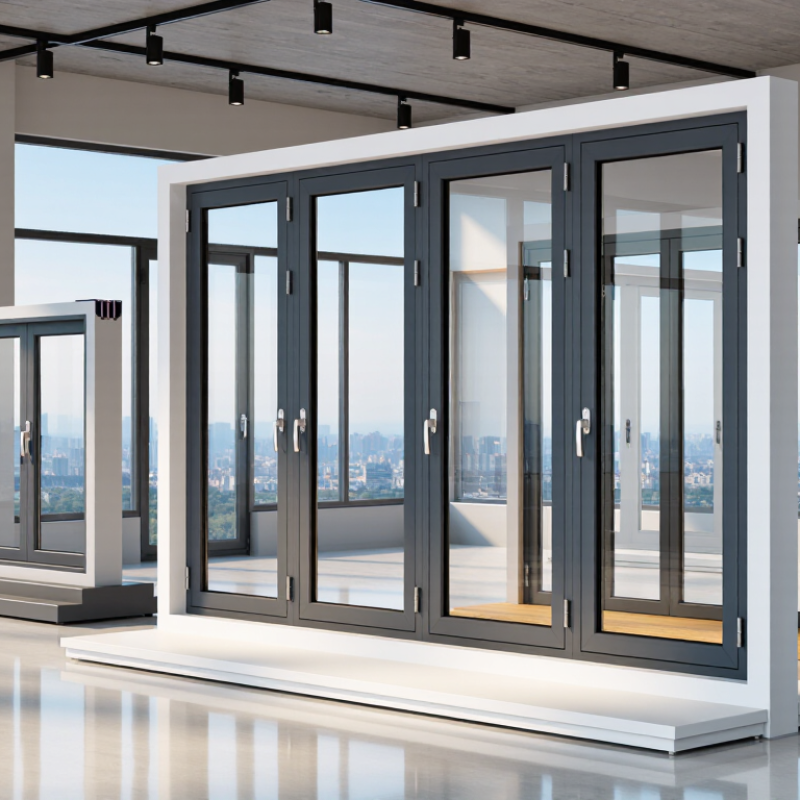
Overview of China’s Windows and Doors Manufacturing Industry
Top Long Windows and Doors Manufacturers in China
China’s windows and doors manufacturing industry serves residential, commercial, and renovation projects at many price points. Factories produce aluminum, uPVC, timber, and composite systems, with options for different climates and building designs. Many suppliers combine profile processing, glass fitting, hardware installation, and finished-product inspection under one roof. This can shorten production cycles, though actual lead times depend on specifications and order size.
Manufacturing capacity is only part of the picture. Buyers should check how a supplier handles frame dimensions, glass thickness, seals, drainage channels, and hardware testing. Ask for current product drawings and inspection records, then compare them with a physical sample when possible. Regional production networks can make components easier to source, but quality may vary between suppliers. That matters. A polished showroom sample does not prove every batch will match it, and even careful factories can miss details.
Tips: Request a sample with the same finish and glass configuration as your planned order. Confirm packaging, delivery timing, and what happens if measurements change. Keep written specifications. Small omissions can become costly. I would not judge a manufacturer by price alone; response quality and traceable checks deserve attention too.
Top Long Windows and Doors Manufacturers in China - Overview of China’s Windows and Doors Manufacturing Industry
| Industry Segment | Common Products | Typical Materials and Construction | Key Performance Considerations | Common Applications |
|---|---|---|---|---|
| Aluminum windows and doors | Casement, sliding, tilt-and-turn, and folding systems | Aluminum profiles; thermally broken profiles use an insulating barrier between the inner and outer sections | Air and water tightness, wind resistance, thermal performance, hardware quality, and profile design | Residential buildings, commercial projects, and large glazed openings |
| uPVC windows and doors | Casement and sliding windows, balcony doors, and entrance doors | Rigid unplasticized polyvinyl chloride profiles, often reinforced internally where the system design requires it | Profile and reinforcement design, glazing, seals, drainage, hardware, and resistance to weathering | Housing and renovation projects where low-maintenance frames are required |
| Wood windows and doors | Casement windows, patio doors, and interior or exterior doors | Engineered or solid timber components with protective coatings; glazing may be incorporated in window and patio-door designs | Moisture management, coating durability, timber stability, joinery, and maintenance requirements | Residential projects and architectural designs that feature natural interior finishes |
| Aluminum-clad wood systems | Windows and doors combining a timber interior with a weather-facing exterior layer | Timber frame on the interior with an exterior aluminum cladding component | Cladding attachment, drainage, timber protection, glazing, seals, and thermal performance | Higher-specification residential and architectural projects |
| Steel windows and doors | Framed windows, entrance doors, and purpose-designed building systems | Steel sections with appropriate protective finishes; system details vary by intended use | Corrosion protection, section strength, finish quality, hardware, and project-specific performance needs | Commercial, industrial, and architectural applications |
| Glazing and configuration | Single, double, or triple glazing, depending on the system and project specification | Glass units are selected alongside the frame, seals, spacers, and hardware | Thermal insulation, solar heat gain, daylight, acoustic needs, safety, and local code requirements | Residential and commercial projects with requirements that depend on climate and building design |
| Manufacturing and quality control | Made-to-order and project-based window and door systems | Processes may include profile cutting, fabrication, assembly, glazing, finishing, and inspection | Dimensional accuracy, consistent assembly, material traceability, product testing, and packaging for transport | Domestic construction and export projects; specifications should be confirmed for each destination |
Note: Product specifications and applicable building requirements vary by project, climate, and destination market. Compare complete system performance and test documentation rather than frame material alone.
Related Posts
-

Top Rated Long Windows and Doors for Global Buyers?
-
2026 Top Window and Door Store Types for Global Buyers?
-
2026 Top Types of Windows and Doors for Global Buyers?
-

Top Window and Door Store Types for Global Buyers?
-
Top 10 Integrity Windows and Doors Suppliers Worldwide?
-

Top Harvey Windows and Doors Suppliers for Global Buyers
Share On: