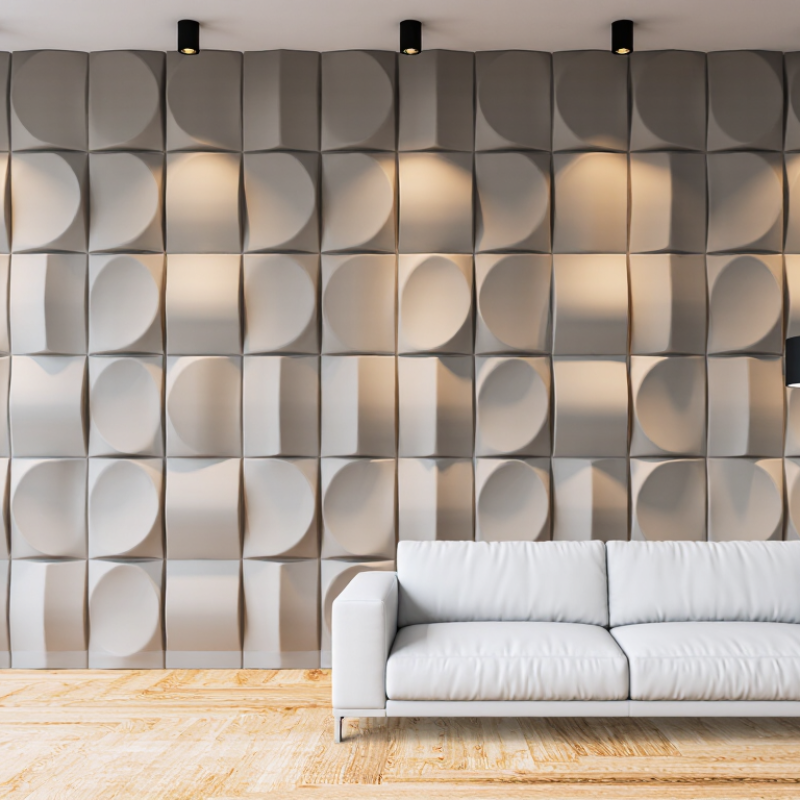
| What the panel is | A decorative wall covering made from wood-plastic composite (WPC), formed with a raised or sculpted surface to create a three-dimensional effect. | Panels are fixed to a suitable wall or supporting framework using a method compatible with the panel design. | Composition, thickness, finish, and profile vary by product. Check the product documentation before selecting fixings or adhesives. |
| Living rooms and feature walls | Used to add texture behind a sofa, television, or focal point in an indoor living space. | Adhesive may be suitable on a clean, dry, flat, sound wall when the panel instructions permit it. Mechanical fixings can provide additional support. | Plan the panel layout and cut-outs before installation. Confirm that the wall can support the panels and any attached items. |
| Bedrooms and headboard walls | Creates a decorative backdrop behind a bed or across a selected wall area. | Panels may be bonded to a prepared wall or secured to battens, depending on panel weight, wall condition, and installation guidance. | Keep panels clear of heat sources and electrical fittings unless the relevant clearances and installation details have been confirmed. |
| Offices and reception areas | Adds a textured finish to meeting rooms, reception walls, and other interior spaces. | For larger areas or walls that are not even, a batten framework with mechanical fixings can help create a consistent mounting plane. | Consider access to wiring, maintenance requirements, and the room’s fire-safety specifications. |
| Retail and hospitality interiors | Used as an accent finish on selected walls in shops, cafés, and similar indoor settings. | Adhesive, screws, or a concealed fixing system may be used if approved for the panel and substrate. | Choose a finish and fixing approach suited to expected cleaning, impact, and traffic. Verify applicable building and fire requirements. |
| Bathrooms and other humid areas | May be considered for suitable interior locations, but moisture resistance depends on the specific panel and its installation details. | Use only where the product is rated for the exposure; seal joints and edges as directed by the manufacturer. | Do not assume that a WPC panel is waterproof or suitable for a shower or continuous water exposure. Follow product guidance and local requirements. |
| Adhesive fixing | Often used for lightweight panels on stable, smooth interior surfaces. | Apply a compatible construction adhesive in the pattern and quantity specified for the panel, then position and support the panel as instructed while it bonds. | The substrate must be clean, dry, sound, and suitable for bonding. Adhesive alone may not be appropriate for every panel or wall. |
| Screw fixing to battens | Useful when the wall is uneven, when a service space is needed, or when additional mechanical support is appropriate. | Level the battens, locate suitable structural fixing points, and secure the panels with compatible screws at the recommended positions. | Check batten spacing, screw type, and fixing locations against the panel instructions. Avoid overtightening or damaging the panel surface. |
| Clips or interlocking systems | Available with some panel profiles to help align adjoining panels or conceal fixings. | Fit the specified clips or engage the panel joints in sequence, fixing the system to a suitable substrate or framework. | Use only the compatible fixing system. Keep joints aligned and allow for any movement clearances required by the product instructions. |
| Preparation and finishing | Applies to most installation approaches and helps improve fit and appearance. | Measure and mark the layout, cut panels with suitable tools, dry-fit where practical, and finish exposed edges with compatible trims if required. | Allow panels to acclimatize when the product instructions call for it. Follow specified expansion gaps, ventilation details, and cleaning guidance. |

Share On: