What Is an LED High Bay Light?
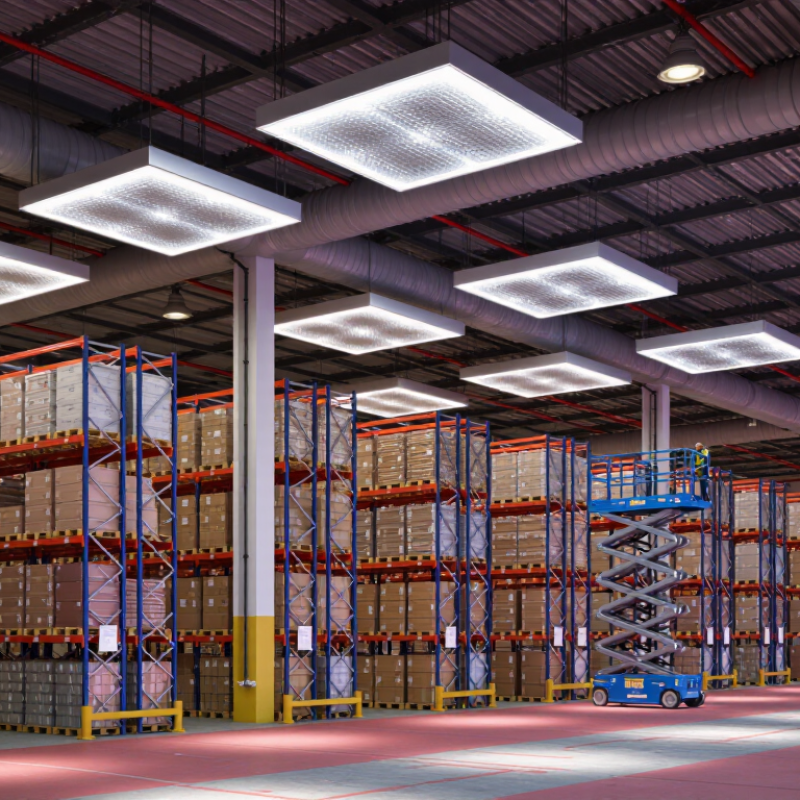
A warehouse aisle can look bright from the floor yet leave shelf labels in shadow. That is where a Led High Bay Light is designed to help. It is a ceiling-mounted fixture for spaces with high ceilings, such as warehouses, factories, gyms, and large retail areas. Its optics direct light toward work surfaces and aisles, rather than simply flooding the ceiling.
The technology matters, but so does the layout. The U.S. Department of Energy’s 2019 report, Energy Savings Forecast of Solid-State Lighting in General Illumination Applications, projected potential annual savings of 569 terawatt-hours by 2035 from wider solid-state lighting adoption. That is a broad national forecast, not a guarantee for any one building. A facility’s results depend on its existing lights, operating hours, controls, and installation choices. Real projects can be less tidy than product claims suggest.
This guide explains what high bay LED fixtures are, how they differ from traditional high-intensity discharge lamps, and which details affect performance. Look beyond wattage. Mounting height, beam angle, glare, color quality, and spacing can change what workers actually see. A high-output fixture may still create dark patches if it is poorly positioned. That detail is easy to miss. The goal is useful, even illumination—and a careful comparison of specifications, not a quick promise of savings.
Definition and Purpose of an LED High Bay Light
An LED high bay light is a ceiling-mounted fixture designed to illuminate large indoor spaces with high ceilings. The term “high bay” describes where the light is used, not one exact shape or brightness. These fixtures are common in warehouses, factories, gyms, and big retail areas. From high above, they spread light across floors, workbenches, aisles, or storage racks. Useful overhead light.
Its purpose is to provide practical, consistent visibility across a broad area while using LED technology. Compared with older lighting types, LEDs generally use less energy and can require less frequent lamp replacement. However, the result depends on the fixture, installation, and operating conditions. A high lumen rating alone does not guarantee even lighting. Beam angle, mounting height, spacing, and glare all affect what people see at floor level. A narrow beam may leave dark gaps between racks, while an overly wide beam can waste light on walls. Small details matter. Before choosing a fixture, assess the room layout and the tasks performed there. A space used for picking small parts may need different illumination than a gym floor. Even a careful plan can miss a shadow behind a tall shelf, so checking light levels after installation is worthwhile.
What Is an LED High Bay Light?
An LED high bay light is a ceiling-mounted fixture designed to illuminate large indoor spaces with high ceilings, such as warehouses, factories, and gymnasiums.
High bay lighting is commonly used at ceiling heights of about 20 feet (6 meters) and above. The chart shows representative ceiling heights, not required fixture mounting points; the appropriate lighting layout depends on the space and its lighting needs.
Key Components and How LED High Bay Lights Work
What Is an LED High Bay Light?
Key Components and How LED High Bay Lights Work
An LED high bay light is designed to illuminate large spaces with high ceilings, such as warehouses and workshops. Its LED board converts electrical energy into light. A driver regulates the current, helping the LEDs operate steadily despite changes in incoming power. The lens or reflector shapes the beam, directing light onto floors, aisles, and work surfaces. Small details matter. A narrow beam may create bright patches, while a wider optic spreads light more evenly.
Heat must also go somewhere. A metal housing or heat sink draws warmth away from the LED board, helping protect its output and service life. Poor thermal design can shorten component life; a high lumen rating alone cannot reveal that risk. Photometric and electrical tests under IES LM-79 provide useful performance data for evaluating complete lighting products. The U.S. Department of Energy’s Energy Saver guidance says LEDs use at least 75% less energy and last up to 25 times longer than incandescent lighting. That comparison does not guarantee the same savings against every high-bay fixture. Real results depend on operating hours, controls, installation, and maintenance. One imperfect but useful check: compare measured light distribution, not just the number printed on the carton.
Common Types of LED High Bay Lights
What Is an LED High Bay Light?
Common Types of LED High Bay Lights
LED high bay lights are designed for ceilings often found in warehouses, workshops, and gyms. Their shape and optics affect how evenly light reaches floors, shelves, and work areas. The most familiar type is the UFO high bay, a compact, round fixture with a heat-dissipating housing. It suits open spaces where light needs to spread in several directions. It is compact. Some models offer interchangeable lenses, but the beam angle still needs to match the ceiling height and layout.
Linear high bays have long housings and distribute light along aisles, production lines, or rows of shelving. They can reduce dark gaps between fixtures when arranged in line, though placement matters.
Reflector-style high bays use shaped reflectors to direct light toward a particular area. Check the beam. A narrow beam may work for tall racks but create bright spots on the floor; a wider one can improve general coverage.
Not always. There is no single best type for every building. Compare lighting layouts, mounting height, glare, and published photometric data before choosing. A quick visual check alone can miss uneven areas, especially between shelves.
Mounting Heights and Installation Considerations
An LED high bay light is built for ceilings commonly found in warehouses, workshops, and large retail spaces. Its mounting height affects how light reaches the floor and work surfaces. At greater heights, a wider beam can help cover more area, while a narrower beam may suit tall shelving or focused work zones. The right choice depends on ceiling height, fixture spacing, and the tasks below. A bright fixture alone does not guarantee even lighting.
Before installation, measure the ceiling and note beams, sprinklers, doors, and storage racks. These details can block light or limit safe access. Check the fixture’s recommended mounting range and confirm that the ceiling structure can support its weight. Plan wiring and controls before using a lift; installation at height deserves careful preparation. Use a qualified electrician for electrical connections. Measure twice. After installation, inspect the floor and work areas from several angles. Look for dark patches, glare on polished surfaces, or shadows beneath shelving. A layout that looks balanced on paper may need adjustment in the real space. That is worth acknowledging.
Typical Applications and Performance Benefits
What Is an LED High Bay Light?
Typical Applications and Performance Benefits
An LED high bay light is designed for spaces with high ceilings, often around 6 metres or more. Common settings include warehouses, factories, gymnasiums, and distribution centres. Wide, carefully controlled light can illuminate shelving, workbenches, and open floors from above. In a warehouse aisle, suitable optics help reduce dark gaps between racks. The right layout still depends on ceiling height, surface reflectance, and the work being done. More lumens alone do not guarantee better visibility.
LEDs can lower energy use and maintenance needs when replacing older high-wattage fixtures. The U.S. Department of Energy’s 2017 Energy Savings Forecast of Solid-State Lighting projected annual savings of about 569 terawatt-hours by 2035 across general lighting applications. That is a sector-wide forecast, not a promise for every building. Compare fixture wattage and operating hours before estimating savings. Occupancy sensors may help in intermittently used storage areas. Still, a retrofit can disappoint. Poorly matched optics may create bright spots, while excessive glare can make inspection work harder. Measure light levels after installation, and adjust aiming or controls where needed.

Share On: