
Blog

Why Choose Artificial Marble for Your Project?

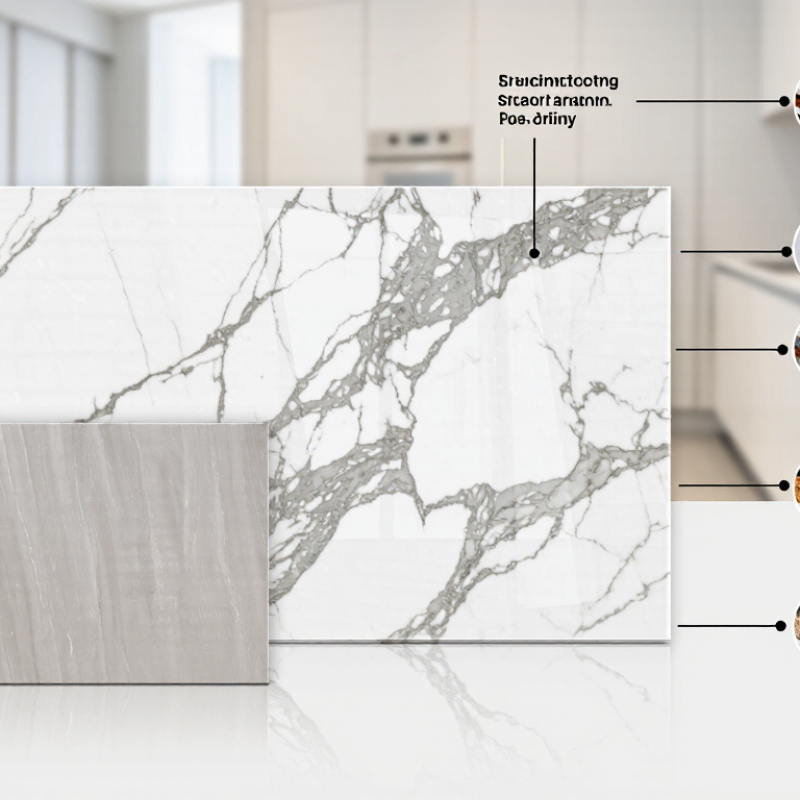
Artificial Marble offers the visual appeal of natural stone with more predictable color, pattern, and sizing. That consistency can simplify a kitchen, bathroom, reception desk, or feature wall. A fabricator can often match adjoining slabs more closely, helping create a calmer, more coordinated surface. The material also comes in varied finishes, from polished white with fine veining to softly honed gray. Small details matter. Ask to see a full-size sample under the lighting planned for the room.

Its benefits are practical, but not universal. Performance depends on the product’s composition, installation, and care instructions. Heat, abrasive cleaners, and prolonged exposure to certain substances may damage some surfaces. Confirm the manufacturer’s guidance before selecting it for a busy kitchen or commercial setting. Also compare edge options, seam placement, warranty terms, and repair procedures. These choices affect the finished result more than a showroom photograph suggests.

A verified quotation from a named Artificial Marble expert was not provided, so attributing one would risk misrepresenting their words. A useful principle for this decision is: “Choose the surface for the way the room will be used, not only for how it looks.” Treat that as an editorial summary, not a direct expert quotation. Artificial Marble may suit projects that value consistent appearance and straightforward design coordination. Still, it is not the right answer for every space. Compare samples, ask specific questions, and review the care requirements before committing.
Why Choose Artificial Marble for Your Project?

Define Artificial Marble Through EN 14618:2009 Classification

Artificial marble is a broad trade term, not a precise description of every slab’s composition. EN 14618:2009 provides terminology and classification for agglomerated stone products. It helps distinguish product families by their constituents, including the aggregates and binders used. That distinction matters. A polished slab with marble chips and resin may look similar to one made with different ingredients, yet their care needs can differ.

For a project, use the classification as a starting point, not a performance guarantee. It does not, by itself, tell you how a specific surface will respond to heat, stains, abrasion, or outdoor exposure. Check the product’s technical documentation for its declared composition and relevant test results. Ask for the intended-use guidance, too. A label alone is not enough.

On a kitchen island, a pale surface may show a coffee ring or fine scratch more clearly than a speckled finish. In a bathroom, frequent moisture makes installation and maintenance details worth checking. I would not assume that every product sold as artificial marble falls within the same classification. Verify the standard’s stated scope and the supplier’s supporting documents before comparing products. That extra check can prevent a costly mismatch.

Why Choose Artificial Marble for Your Project? - Define Artificial Marble Through EN 14618:2009 Classification

Classification dimension Category or description What it means Project considerations
Product terminology Agglomerated stone EN 14618:2009 covers terminology and classification for agglomerated stone: a manufactured product made from aggregates combined with a binder, with possible additives or pigments. Use the product’s declared composition and technical documentation to confirm what “artificial marble” means for a particular material.
Binder type Resin-bound agglomerated stone Mineral aggregates, often including marble, are bound with a resin. Pigments and other permitted constituents may also be used. Can provide a controlled, repeatable appearance. Check the manufacturer’s care guidance and suitability for the intended heat, chemical, and exposure conditions.
Binder type Cement-bound agglomerated stone Mineral aggregates are bound with a cementitious binder. The appearance and performance depend on the formulation and manufacturing process. Confirm the product’s intended application and installation requirements; do not assume all cement-bound products have the same performance.
Aggregate and appearance Marble-containing mix; pigments or other aggregates may be present The aggregate mix and pigments influence the surface pattern, colour, and visible distribution of particles. Review a representative sample and slab before selection. Pattern and colour can vary between batches and pieces.
Material comparison Artificial marble versus natural marble Artificial marble is a manufactured composite; natural marble is quarried stone. Their composition, visual variation, and care requirements are not interchangeable. Choose based on the desired appearance, maintenance needs, fabrication details, and the product-specific technical data.
Standards and performance Classification is not a performance rating EN 14618:2009 provides terminology and classification. A binder category alone does not establish a product’s suitability or measured performance for a specific use. Request applicable test results and installation instructions for the intended use, such as worktops, flooring, wall cladding, or other surfaces.

Compare Mineral-Filler Content (%) and Resin-Binder Ratios by Product

Why Choose Artificial Marble for Your Project?

Artificial marble is not one fixed recipe; filler and resin proportions differ by product. A datasheet may list mineral filler as a percentage, but confirm whether it means weight or volume. The distinction matters: dense mineral powders can dominate weight while occupying less volume. Numbers matter. Ask which minerals are included, too. Calcite and alumina trihydrate can behave differently during cutting and heat exposure.

A higher filler percentage often means less resin, but it does not automatically mean better performance. Some formulations feel cool and stone-like under a hand, yet may chip more readily at a narrow edge. More resin can improve cohesion and help bind pigments, while potentially changing scratch, heat, or UV behavior. These are tendencies, not guarantees. Product thickness, particle size, curing, and fabrication quality also affect results.

Compare products using the same basis, and request the stated resin-to-filler ratio alongside test methods. If one supplier reports weight percent and another gives volume percent, the figures are not directly comparable. I would be cautious here: these tables are easy to overread. A sample offcut is useful; inspect its edge after a clean cut and note its surface feel after ordinary wiping. For kitchens or bathrooms, check product-specific data for water absorption, stain resistance, and heat limits rather than inferring them from composition alone.

Evaluate Water Absorption (%) and Flexural Strength (MPa)

Artificial marble can offer a consistent surface, but its performance depends on the mineral mix, resin content, and manufacturing process. Two useful checks are water absorption and flexural strength. Ask for test results for the actual product, not just a general specification. Small differences matter.

Water absorption Water absorption, reported as a percentage by mass, indicates how much water a sample takes in under a defined test. ASTM C503/C503M, a specification for natural marble, sets a maximum absorption of 0.20%. This is a useful industry benchmark, not a pass mark for every artificial-marble product. A low result may suit a bathroom vanity, but it does not prove stain resistance or replace proper sealing where required. Check the test method and sample condition.

Flexural strength Flexural strength, measured in MPa, shows how well a slab resists bending before failure. ASTM C503/C503M specifies a minimum modulus of rupture of about 7 MPa for natural marble. Compare artificial-marble results only when the test method, thickness, and specimen direction are clear. That comparison is imperfect. A countertop with a long unsupported span can still crack, even when its test result looks strong; cut-outs and installation support matter too. Ask for the laboratory report, and inspect edges and sink openings before choosing.

Match Mohs Hardness (1–10) and Slab Thickness to Project Requirements

Artificial marble can give a project a consistent stone-like surface, but hardness and thickness should suit the way each area will be used. The Mohs scale ranks scratch resistance from 1 to 10; it does not measure impact strength or stain resistance. Artificial marble blends can vary, so ask for the specific product’s technical data rather than assuming one rating fits every slab. A sample is useful. Try it beside the actual cabinetry and lighting, and check how its surface looks after routine cleaning.

For a kitchen counter, a higher reported Mohs hardness may help resist scratches from everyday contact, but cutting directly on the surface can still leave marks. Use a board. For a bathroom vanity or wall panel, scratch demands may be lower, while edges and cutouts still need careful handling. Slab thickness matters too. Thinner slabs can suit wall cladding or supported surfaces; thicker slabs may provide a substantial edge, but they do not automatically make an overhang safe.

Common options include roughly 12, 20, or 30 millimeters, though availability varies by product and region. Match thickness to span, support, sink openings, and the fabricator’s installation guidance. I would not treat a number as a promise. A hard surface can still chip at a poorly supported corner, and a thicker slab can add weight to cabinetry. Check the full specification before selecting a finish.

Compare Lifecycle Cost, Maintenance Needs, and Application Suitability

Why Choose Artificial Marble for Your Project?

Artificial marble can lower upfront costs compared with many natural stone options, but purchase price is only one part of the decision. Include fabrication, installation, sealing requirements, repairs, and likely replacement in your lifecycle estimate. Its consistent pattern may also reduce material waste when several matching surfaces are needed. Still, quality varies. Ask for technical data and confirm that the product suits your expected use.

Maintenance is often straightforward: wipe everyday spills with a soft cloth and mild cleaner. Avoid abrasive pads, which may dull the surface, and check care instructions before using chemicals. Some products resist stains well, while others can discolor from heat, dyes, or prolonged exposure to moisture. A hot pan can leave damage. That detail matters in busy kitchens. Compare warranties carefully, since coverage and exclusions differ.

Tips: Request a sample and test it with common spills, such as coffee or cooking oil. Check the edge finish, too.

Artificial marble often suits bathroom vanities, reception counters, and decorative wall panels, where appearance and easy cleaning matter. For heavily used worktops, compare heat tolerance and repair options with alternatives. In a high-traffic setting, even a small chip may become frustrating. Choose based on the room’s actual demands, not appearance alone.

Share by: