Aluminum storm doors are secondary exterior doors installed in front of an entry door. They create a narrow buffer against wind, rain, dust, and temperature changes. Most models use an aluminum frame, interchangeable glass and screen panels, weatherstripping, hinges, and a closer. The system works simply. The door slows air movement, limits direct moisture exposure, and allows ventilation when the glass panel is replaced with a screen. On a sunny afternoon, the glass can also warm the space between both doors. That benefit depends heavily on shading and ventilation.
The U.S. Department of Energy reports that well-installed low-emissivity storm windows can reduce heating and cooling energy use by roughly 10% to 30%. Storm doors are not identical, so this figure should not be transferred without caution. Still, the principle is relevant: an added, sealed layer can reduce drafts and heat transfer. The National Fenestration Rating Council recommends comparing verified U-factor and solar heat gain information when available. These ratings provide stronger evidence than marketing claims. They also encourage a more reliable purchasing decision.
Material choice requires thought. Aluminum resists corrosion and keeps frames relatively light, but it conducts heat quickly. A frame with a thermal break can perform better than a basic metal frame. Poor installation can leave gaps around the sill, latch, or hinges. Then the expensive door may still whistle during winter. That is the uncomfortable part. A storm door cannot repair a damaged entry door or compensate for weak weatherstripping. Homeowners should inspect the existing frame, measure carefully, and follow manufacturer instructions. The result is usually practical, but never automatic.
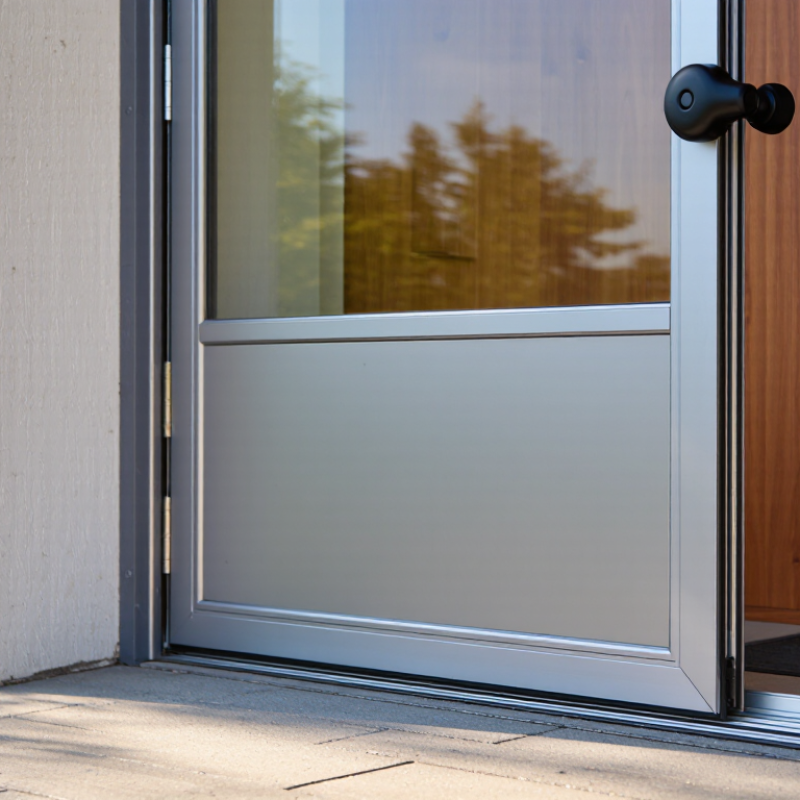
Aluminum storm doors are secondary exterior doors installed in front of a main entry door. Their frames use lightweight aluminum, while panels may contain glass, screen mesh, or both.
This structure creates a narrow buffer between indoor rooms and outdoor weather. It can also brighten a dark entrance. A closer, hinges, latch, and weatherstripping complete the assembly. These components matter more than appearance. A strong frame may still perform poorly when the seal is uneven. That detail is easy to miss.
When the main door opens, the storm door helps limit rain, wind, dust, and insects. In warm weather, a screened panel allows airflow while keeping many pests outside. In colder months, a glass panel can reduce direct drafts near the threshold.
However, it does not replace insulation or repair a damaged entry door. A careful installation keeps the frame square and leaves enough clearance for smooth movement. Uneven floors can complicate that process. A common mistake is tightening every screw before checking the latch. The door may bind, scrape, or close too slowly. Regularly inspect the weatherstrip, closer tension, and screen for tears. Aluminum resists rust, but it can dent or corrode near harsh coastal air. Small gaps deserve attention before they become noticeable indoor drafts.
Aluminum storm doors are built around a lightweight frame made from extruded aluminum sections. These sections are shaped under heat and pressure, then cut to fit the doorway. The frame usually includes a top rail, side rails, a bottom rail, and reinforcing corners. Aluminum resists rust, but it can still dent. That weakness matters in busy entrances.
The door panel may contain tempered glass, a screen, or interchangeable inserts. Glass beads or retaining strips hold these panels inside the frame. Small rubber gaskets reduce rattling and help block drafts. Some designs use a solid lower panel for added impact protection. The hinges attach to one side rail, while a latch and strike plate secure the opposite side. Adjustable closers control how quickly the door returns to its frame.
Construction quality depends on alignment, fasteners, and sealing details. Screws should anchor firmly into the main door frame, not only into thin trim. A sweep along the bottom closes the gap above the threshold. Side seals perform a similar job around the jambs. Without careful fitting, even a strong aluminum door may leak air or scrape the sill. I have found that installation often affects performance more than the material itself. That point is easy to overlook. Poor drainage can also trap water near the bottom rail, where dirt and moisture gradually weaken the seal.
How Aluminum Storm Doors Are Constructed
Aluminum storm doors typically combine a lightweight aluminum frame with glass or screen panels, flexible weatherstripping, and steel hardware. The chart compares the approximate densities of common materials used in these components. Aluminum provides structural strength with less weight than steel, while glass, seals, and hardware contribute to visibility, ventilation, insulation, and secure operation.
What Are Aluminum Storm Doors and How Do They Work?
Aluminum storm doors are protective outer doors installed in front of an entry door. They create a narrow air buffer between outdoors and the home. Their lightweight frame holds glass panels, screens, hinges, and weather seals. Aluminum resists rust, but salty air can still cause surface corrosion. Proper drainage and occasional cleaning remain important.
A storm door works by controlling air, light, and seasonal exposure. Glass panels block wind-driven rain, cold air, and flying debris near the main entrance. Screen panels allow airflow during warmer weather. When the door closes, a pneumatic closer controls its movement and helps prevent sudden slamming. Weatherstripping around the edges reduces drafts, although it rarely makes the opening completely airtight. Small pressure changes can still be noticeable on windy days.
Installation affects performance more than many homeowners expect. The frame must sit squarely, with even gaps along each side. A loose hinge or compressed seal can create a visible cold spot near the threshold. I have found that closer tension often needs adjustment after several weeks of use. Too much tension makes the handle difficult to pull. Too little allows the door to swing freely. Aluminum storm doors are practical, but they are not maintenance-free. Inspect the screws, seals, drainage openings, and glass clips before winter weather arrives.
Aluminum storm doors add a protective layer outside an entry door. Their lightweight frames resist rust and handle frequent use. Glass panels reduce drafts while allowing daylight into the foyer. Screen panels improve airflow during warmer months. Many models include weather stripping, adjustable closers, and keyed locks. These features help limit dust, rain, insects, and heat loss.
Design choices affect both comfort and appearance. Full-view doors use large glass panels for maximum light. Mid-view styles place a solid section near the bottom. High-view designs offer more privacy and better protection for busy households. Some doors use removable glass and screen inserts. Others include retractable screens that disappear into the frame. Common finishes include white, bronze, black, and metallic tones. Hardware shapes also change the door’s visual character. A simple lever can look cleaner than a decorative pull.
Tips: Measure the opening at several points before choosing a size. Check the threshold, hinge side, and door swing. Uneven framing may need adjustment. I have seen attractive doors perform poorly because installers ignored these details. That mistake is easy to repeat. Choose tempered glass where available, especially near active walkways. Inspect the closer after installation, too. It should shut firmly without slamming.
What Are Aluminum Storm Doors and How Do They Work?
Aluminum storm doors add a protective layer outside an entry door. Their frame holds glass, screens, hinges, and a closing mechanism. Installation starts with accurate opening measurements. The installer checks the sill for level and confirms the frame meets the jamb evenly. Small gaps can admit rain, insects, and cold air. Screws should enter solid framing, not only thin trim. A poor fit is surprisingly common.
Maintenance is simple but not optional. Wash aluminum frames with mild soap and water twice yearly. Clear the bottom track before it collects grit. Inspect weatherstripping, closer tension, latch alignment, and screen edges. Lubricate approved moving points lightly. Excess oil attracts dust. Replace cracked seals rather than forcing the door shut.
These doors suit entryways, porches, rental properties, and homes needing seasonal ventilation. A screen panel can improve airflow without leaving the main door open. A glass panel adds daylight and shields the primary door from wind-driven rain. The U.S. Energy Information Administration’s 2020 Residential Energy Consumption Survey reports that space heating represented 42% of household energy use. A storm door cannot solve poor insulation, but it may reduce drafts around a sound entry system. U.S. Department of Energy guidance also links careful air sealing with lower heating and cooling demand. The exact benefit depends on climate, orientation, and installation quality. Measurements deserve a second check.
| Data Dimension | Typical Information | How It Works or Why It Matters | Practical Consideration |
|---|---|---|---|
| Definition | A secondary exterior door made primarily with aluminum framing and panels, installed in front of an entry door. | It creates an additional layer between the interior living space and outdoor conditions. | It is not a replacement for a properly installed primary entry door. |
| Main Frame Material | Extruded or formed aluminum, often finished with a baked-on or powder-coated coating. | Aluminum provides a relatively lightweight, corrosion-resistant frame that can support glass, screens, and panels. | Protect exposed surfaces from prolonged contact with salt, standing water, and harsh chemicals. |
| Common Door Configurations | Full-view, mid-view, high-view, retractable-screen, and interchangeable-screen designs. | The configuration determines how much natural light, ventilation, privacy, and weather protection the door provides. | Choose a style that matches the entry door, available clearance, and local climate. |
| Typical Components | Aluminum frame, glass or screen insert, hinges, handle set, latch, closer, sweep, and weatherstripping. | Each component contributes to operation, airflow control, security, or resistance to drafts and moisture. | Replacement parts should match the door’s dimensions and mounting design. |
| Weather Protection | Helps reduce direct exposure to wind-driven rain, snow, dirt, and sunlight at the entryway. | The door and its seals form a buffer zone in front of the primary entry door. | Performance depends on correct installation, intact seals, and a level threshold. |
| Ventilation Function | Screen sections allow outdoor air to enter while the main entry door remains open. | Air passes through the mesh while the screen helps limit insects and larger airborne debris. | Use a secure latch or closer when ventilating, especially in windy conditions. |
| Thermal Effect | A closed storm door can add a modest air space in front of the primary door. | The extra layer may reduce drafts and limit direct heat transfer, although results vary by design and installation. | It should not be treated as a substitute for insulated walls, weatherproofing, or energy-efficient glazing. |
| Pre-Installation Measurements | Measure the opening width at the top, middle, and bottom, plus the height on both sides and in the center. | Multiple measurements reveal whether the opening is square and whether adjustment or shimming is needed. | Confirm hinge-side clearance, handle clearance, threshold condition, and door-swing direction. |
| Basic Installation Sequence | Position the hinge-side mounting rail, attach the top rail, set the latch-side rail, secure the sweep, and install hardware. | The frame is aligned within the exterior opening so the panel can close evenly against the seals. | Follow the product’s installation instructions and use exterior-rated fasteners and sealant where specified. |
| Alignment Check | The gap around the door should be reasonably consistent, and the latch should engage without excessive force. | Proper alignment allows the closer, latch, sweep, and weatherstripping to work as intended. | A door that rubs, binds, or will not latch may require adjustment before continued use. |
| Routine Cleaning | Wash aluminum surfaces, glass, and screens with mild soap, clean water, and a soft cloth or brush. | Removing dust and grit helps protect the finish and prevents particles from interfering with moving parts. | Avoid abrasive pads, strong solvents, and cleaners that may damage coatings or plastics. |
| Hardware Maintenance | Inspect hinges, screws, handles, latches, closers, and tracks periodically. | Tight hardware and correctly adjusted closers help prevent slamming, sagging, and incomplete latching. | Use a compatible light lubricant only where the hardware instructions permit it. |
| Weatherstripping and Sweep | Inspect the perimeter seals and bottom sweep for cracking, compression, gaps, or excessive wear. | These parts limit air leakage and help keep water, insects, and debris from passing around the panel. | Replace damaged seals rather than relying on excessive closer tension. |
| Screen Care | Remove loose dust gently and repair or replace mesh with tears, severe stretching, or detached edges. | A clean, intact screen maintains airflow and insect protection. | Do not press hard against the mesh, since it can deform or pull away from the frame. |
| Glass and Insert Safety | Check for cracks, loose retainers, damaged clips, or moisture trapped between sealed glass panes. | Damaged glazing can reduce weather resistance and create a safety hazard. | Replace damaged glass or inserts using compatible parts and appropriate safety procedures. |
| Common Residential Uses | Front entrances, rear doors, side entrances, porches, utility entrances, and mudroom access points. | The door provides a transition layer for ventilation, daylight, weather buffering, and everyday entry control. | Select the door based on traffic level, exposure, ventilation needs, and available space. |
| Common Commercial or Institutional Uses | Low- to moderate-traffic service entrances, enclosed porches, office access points, and protected building entries. | It can help separate indoor areas from outdoor conditions where a full commercial entrance system is not required. | High-traffic or high-security locations may require a heavier-duty door system. |
| Key Limitations | Storm doors do not fully replace primary-door security, structural protection, or professional weatherproofing. | Their effectiveness depends on the condition of the entry opening, the quality of the seals, and correct installation. | Address water intrusion, structural damage, or severe air leakage at the primary door before adding a storm door. |
476 Main Street - Route 28
Dennisport, MA 02639
Share On: