Blog

What Are the Best Types of West Windows and Doors?

Choosing west windows and doors is not just a style decision. Sun exposure, local weather, room use, and installation quality all shape how a product performs. A west-facing window can bring warm afternoon light, but it may also increase glare and heat indoors. A glazed patio door offers a wide garden view, yet its frame, seals, and glass matter as much as its appearance.

Architect Carl Elefante’s well-known reminder is, “The greenest building is the one that is already built.” His words concern buildings broadly, not a specific window product. They still offer a useful perspective: compare repair and replacement options before committing to a larger project. Small details matter. Check glass ratings, frame materials, hardware, drainage, and the installer’s written warranty. Ask how the product suits your climate, not just how it looks in a showroom.

There is no single best type for every home. Vinyl, fiberglass, aluminum, and wood each bring different trade-offs in upkeep, insulation, durability, and cost. A low price can hide a poor fit. So can a beautiful finish. The guide ahead compares common window and door styles, explains where each may work well, and highlights questions to ask before buying. Some choices remain imperfect; budget, architecture, and exposure rarely align neatly. A careful comparison can still help you select products that feel right, function reliably, and hold up through changing seasons.
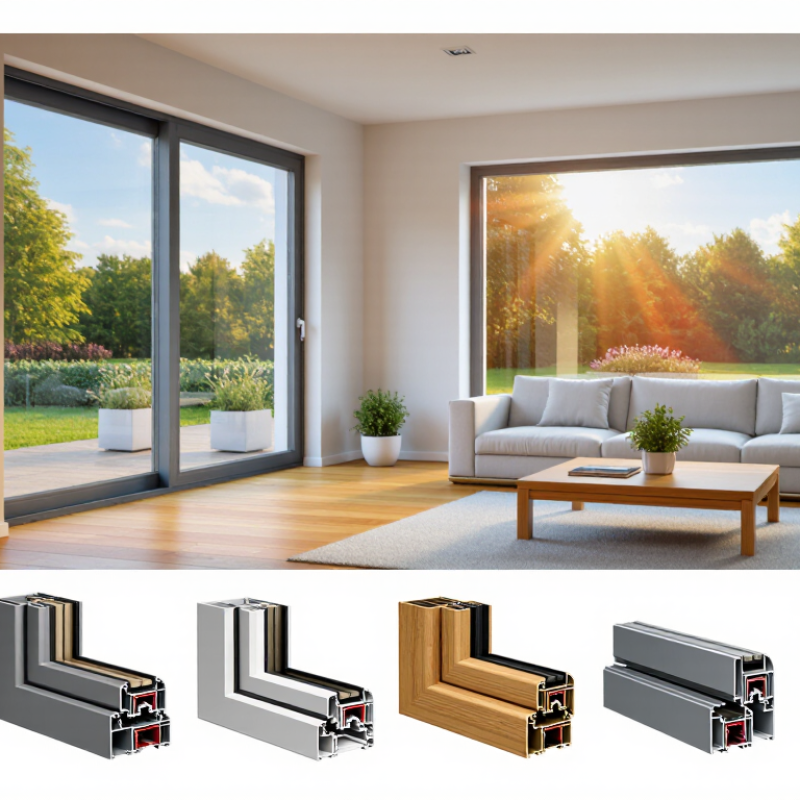
What Are the Best Types of West Windows and Doors?

Assess West Exposure: DOE Says Windows and Doors Use 25–30% of Home Heating/Cooling Energy

West-facing windows can take the hardest afternoon sun, when outdoor temperatures are often already high.

The U.S. Department of Energy estimates that windows and doors account for 25–30% of home heating and cooling energy use. That makes west exposure worth checking, not just the age of the glass.

Stand near the window on a sunny afternoon: warm glass, fading fabric, and glare can reveal where heat is entering. Small clues matter.

For west-facing rooms, compare window options by solar heat gain coefficient, or SHGC, as well as insulation performance. In hot, sunny climates, lower-SHGC glazing can limit unwanted solar heat; in colder regions, the right balance may differ.

Exterior awnings, shade trees, or blinds can also help, though interior curtains may not stop heat before it enters. For doors, look for insulated construction, tight weatherstripping, and a snug threshold.

Feel for drafts around the frame on a windy day. Replacing everything is not always the answer; a well-sealed existing unit may perform better than expected.

I’d still check the whole opening, because a new door cannot fix a leaky frame.

Compare NFRC SHGC Ratings on a 0–1 Scale for West-Facing Glass

For west-facing windows and glazed doors, afternoon sun can strike low and heat a room quickly. The NFRC Solar Heat Gain Coefficient (SHGC) helps compare how much solar heat glazing admits. It runs from 0 to 1: a lower rating means less heat enters, while a higher rating allows more. A unit rated 0.25 generally admits less solar heat than one rated 0.50. That difference can matter beside a sunny desk or sofa.

In a hot climate, lower-SHGC glass may help reduce late-day heat and cooling demand. In a colder region, a higher rating can bring useful winter warmth, though west-facing rooms may still overheat in summer. Exterior awnings, nearby trees, and interior blinds also affect comfort. Numbers need context. Compare ratings for the complete window or glazed door, not just one pane, and check the NFRC label.

SHGC is not a stand-alone verdict. U-factor describes heat transfer, while visible transmittance indicates how much daylight passes through. A lower SHGC can make a room feel cooler, but may also reduce daylight depending on the glass. I would compare these figures against the room’s orientation and shading, then consider what the space actually needs. Real rooms are messy; a rating cannot capture every hot afternoon.

Evaluate Low-E Glass by SHGC, U-Factor, and Visible Transmittance

West-facing windows and glazed doors take the strongest sun late in the day. In summer, that light can heat a room long after the outdoor air begins cooling. Low-E glass helps manage heat and daylight, but “Low-E” alone does not tell you how a unit will perform. Check three ratings together.

The solar heat gain coefficient, or SHGC, estimates how much solar heat passes through the glass. A lower value can help limit afternoon heat, though it may also reduce useful winter warmth. U-factor measures heat transfer; lower is generally better for insulation during cold weather. Visible transmittance, or VT, describes how much daylight enters. Higher VT means a brighter room, but sometimes more glare on a television or a glossy table. Small trade-offs matter.

Compare ratings for the whole window or door assembly, not just the glass, and check that the figures use the same rating method. A west-facing kitchen with little shade may benefit from a lower SHGC, while a shaded room may need more daylight. Look at the numbers on the product label, then consider overhangs, trees, and interior blinds. A rating cannot describe every room. Even a well-chosen unit may feel too bright at 5 p.m. when the sun hits the glass directly.

Match Casement, Awning, and Sliding Windows to Air-Leakage Performance

For west-facing rooms, afternoon sun can expose both heat gain and small air leaks. The U.S. Department of Energy estimates that windows account for 25–30% of residential heating and cooling energy use. That makes the sash seal worth checking, not just the glass.

Casement and awning windows usually close against compression seals, which can help limit leakage when hardware is adjusted and seals are intact. Sliding windows rely on weatherstripping along moving sashes and tracks. A slider is not automatically leaky; its rating and installation matter. Look for an air-leakage value in cubic feet per minute per square foot. Under NFRC 400, lower values indicate less air leakage at the test pressure. Compare rated products, rather than assuming one style always wins. Small gaps add up.

A practical check: feel around the frame on a windy afternoon, especially near the meeting rail and sill. That check is imperfect. It cannot replace a laboratory rating, and curtains can mask drafts. For west-facing openings, pair a tight, well-installed unit with effective exterior shading. DOE guidance notes that reducing unwanted solar heat gain can also ease cooling demand. Don’t overlook the rough opening: even a low-leakage window can underperform if the perimeter seal is incomplete.

What Are the Best Types of West Windows and Doors? Match Casement, Awning, and Sliding Windows to Air-Leakage Performance

Window or Door Type Typical Air-Leakage Performance How the Design Seals Best Fit What to Check
Casement window Often very good The sash closes against a perimeter weather seal. The locking hardware pulls the sash firmly against the frame. Rooms where reducing drafts is a priority and the window can open outward without obstruction. Look for continuous, undamaged weatherstripping, secure multipoint or well-adjusted locks, and a published air-leakage test result.
Awning window Often very good Like a casement, the sash presses against a frame seal when shut. Its top-hinged sash opens outward. Ventilation during light rain or for openings placed higher on a wall. Check that the sash closes evenly along all sides and that the operator draws it snugly against the seals.
Horizontal sliding window Variable; often more leakage-prone The moving sash slides past the fixed sash and relies on pile seals, interlocks, and close alignment rather than compression around the full perimeter. Wide openings, limited exterior clearance, or locations where an outward-opening sash is impractical. Inspect the meeting rail, interlock, track, and weatherstripping. A well-made, properly installed model can perform better than a poorly fitted hinged window.
Single- or double-hung window Variable One or both sashes move vertically. Performance depends on the balance system, sash alignment, seals, and meeting rail. Traditional appearances and openings where outward projection is not suitable. Check sash locks, meeting-rail contact, and the quality and condition of seals along the sides and top.
Fixed window Usually lowest leakage potential The glazing is sealed into the frame and has no operable sash or opening hardware. Daylighting and views where ventilation is not needed. Confirm that the frame-to-wall installation joint is properly air-sealed; a fixed unit can still leak around a poor installation.
Hinged exterior door Often good when well adjusted The door closes against perimeter weatherstripping and a threshold or door bottom. Hinges and latch alignment help maintain contact. Main or secondary entrances where a tight closing seal is desired. Check the head, jambs, threshold, door sweep, and latch alignment. Seals must contact consistently without preventing smooth operation.
Sliding patio door Variable; depends on seals and adjustment Moving panels travel on tracks and generally use interlocking rails and sliding seals rather than a compression seal on every edge. Large glazed openings and spaces where a swinging door would use too much room. Check panel alignment, meeting-stile seals, track condition, and the manufacturer’s tested air-leakage rating.

How to compare products: These are general design tendencies, not guaranteed ratings. Ask for tested air-leakage data for the specific product and size, measured under a recognized test method such as ASTM E283. In comparable tests, a lower air-leakage rate is better. Proper installation, adjustment, and maintained weatherstripping are essential to real-world performance.

Select Patio and Entry Doors Using NFRC Ratings and ENERGY STAR Climate Criteria

For west-facing windows, patio doors, and entry doors, afternoon sun can turn a bright room uncomfortable. The U.S. Department of Energy estimates that windows account for 25–30% of residential heating and cooling energy use. That makes the NFRC label useful: compare its U-factor, which indicates heat flow, and solar heat gain coefficient (SHGC), which indicates admitted solar heat. Lower U-factor usually limits heat transfer; the right SHGC depends on climate and exposure.

ENERGY STAR’s current residential criteria vary by climate zone and product type. Check that a patio or entry door meets the criteria for your location, rather than relying on a generic “energy efficient” claim. NFRC-rated products make comparisons more consistent, but compare like with like: a mostly glazed patio door behaves differently from an insulated entry door. Read the full label. Small details matter.

A low U-factor alone may not solve west-facing glare or summer overheating. In hot, sunny areas, lower SHGC can help reduce unwanted heat; colder regions may benefit from different trade-offs. The DOE’s Energy Saver guidance also notes that window performance affects both heating and cooling loads. Frames, weatherstripping, installation gaps, and shade all influence real-world results. It is easy to focus on one number and miss the draft at the threshold. Check local ENERGY STAR climate criteria, then confirm the exact product’s NFRC ratings before choosing.

Share by: