Blog

What Are the Top 10 Doors and Windows Suppliers in China?

Choosing reliable doors and windows suppliers in China requires more than comparing catalog prices. Factory size can look impressive. It does not always prove consistent performance.

This guide examines ten leading suppliers through practical criteria. These include product quality, thermal insulation, air tightness, water resistance, hardware durability, and customization capacity. We also consider factory certifications, testing records, export experience, production equipment, and after-sales support. A supplier may offer elegant aluminum frames, slim sightlines, or large glass panels. Yet poor installation guidance can still damage an otherwise strong project.

Details matter. Ask how profiles are tested. Check whether corner joints remain stable after repeated weather exposure. Review packaging methods for long-distance shipping. Confirm lead times in writing. These steps may feel slow. They reduce expensive surprises.

Building scientist Dr. Joseph Lstiburek often reminds professionals, “A window is a hole in a wall.” The statement sounds simple, but it carries practical weight. Every door and window affects comfort, energy use, security, and building durability. A low quote may hide weak seals, inconsistent finishes, or limited replacement support.

The suppliers discussed here serve different markets and project types. Some focus on residential developments. Others specialize in commercial façades, passive-house systems, or customized entrances. No single company fits every buyer. That is an uncomfortable truth.

Our comparison aims to provide a dependable starting point, not a final purchasing decision. Buyers should still inspect samples, verify current certifications, and request project references. Manufacturing conditions can change. Supplier claims should be tested against evidence.
What Are the Top 10 Doors and Windows Suppliers in China?

How China’s Door and Window Manufacturing Industry Is Organized

China’s door and window manufacturing industry is organized through regional clusters, specialized factories, and integrated suppliers. Major production areas often concentrate aluminum extrusion, glass processing, hardware, and surface treatment within short transport distances. This structure lowers costs and speeds up customized production.

The top ten suppliers should not be judged by showroom size alone. Some operate complete facilities, including profile extrusion, thermal-break assembly, insulating-glass production, powder coating, and final testing. Others are focused OEM factories that produce doors or windows from approved drawings. Smaller workshops may offer flexibility, but their quality systems can vary sharply. A reliable supplier should provide material certificates, inspection records, production samples, and clear testing methods.

Procurement teams usually divide suppliers into three groups: system developers, project manufacturers, and component specialists. System developers control technical designs and standardize profiles, seals, and hardware. Project manufacturers adapt these systems for apartments, offices, villas, or industrial buildings. Component specialists supply glass units, locks, rollers, or aluminum sections to larger assemblers. The boundaries are not always clear. Some factories outsource glass or hardware while presenting themselves as fully integrated producers. That deserves careful checking. Factory audits should review extrusion lines, storage conditions, coating thickness, corner joints, and water-resistance tests. A polished showroom can mislead. Independent pre-shipment inspection remains useful, especially for large orders and non-standard dimensions. Supplier rankings also need regular review, because capacity, management, and export experience can change within a few years.

Criteria for Ranking the Top 10 Chinese Door and Window Suppliers

Ranking China’s top door and window suppliers requires more than comparing online catalogs. A credible review starts with manufacturing experience, product consistency, and documented quality controls. We examine factory history, production equipment, material traceability, and inspection procedures. Site visits can reveal details that brochures often hide. Clean assembly areas matter. So do stable lead times.

Technical performance receives strong weight. We compare thermal insulation, air tightness, water resistance, sound reduction, hardware strength, and surface durability. Test reports should come from recognized laboratories and match the supplied product. We also review design customization, energy-saving options, and performance in different climates. A supplier serving coastal projects may need stronger corrosion protection. A supplier serving cold regions needs better frame and glass insulation.

Reliability extends beyond the factory gate. We assess quotation accuracy, communication speed, packaging, export experience, installation guidance, warranty terms, and after-sales response. Customer references help, but they require careful checking. One successful project proves little. Our scoring model may still miss personal communication or unexpected production pressure. That limitation deserves attention. Supplier rankings should be updated when test data, delivery records, or service performance changes. The best candidates combine measurable quality with transparent documentation and practical project support. Based on these criteria, a useful top-ten list should inform decisions, not replace independent inspections and sample testing.

What Are the Top 10 Doors and Windows Suppliers in China?

Criteria for Ranking the Top 10 Chinese Door and Window Suppliers

This chart presents a 100-point evaluation framework for comparing Chinese door and window suppliers. The criteria reflect widely used procurement considerations, including product quality, manufacturing capacity, export experience, customization, energy efficiency, after-sales service, and delivery performance. The framework is designed to support objective supplier screening without displaying company or brand data.

Profiles of the Top 10 Doors and Windows Suppliers in China

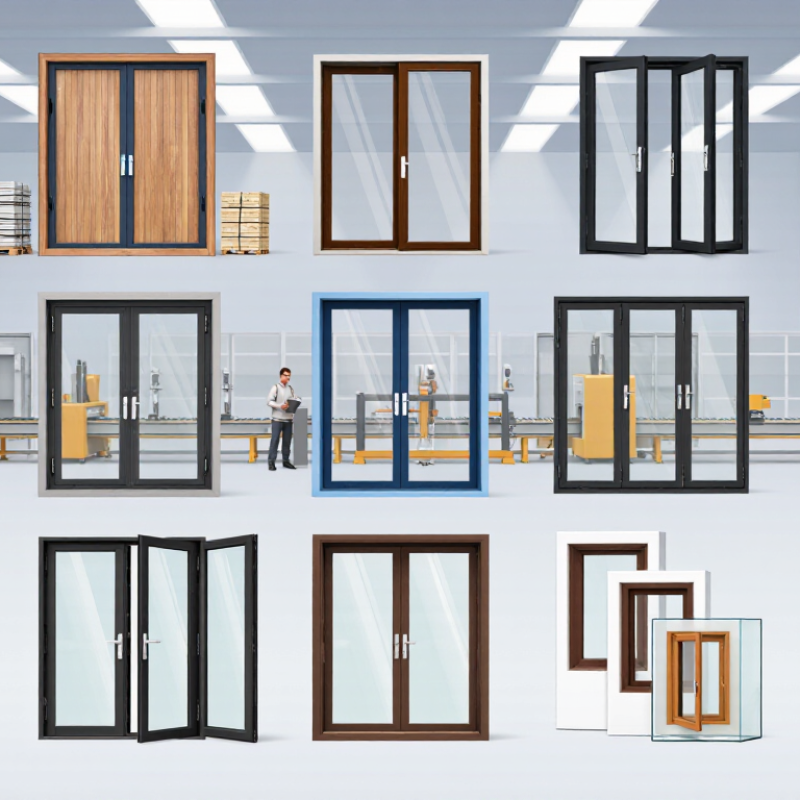
China’s top ten doors and windows suppliers show different strengths rather than identical product lines. One focuses on thermally broken aluminum systems for high-rise projects. Another supplies uPVC windows for residential developments. A third is known for custom entrance doors, while another serves hotels with acoustic and fire-rated solutions. Several suppliers combine factory production with engineering support, helping buyers check drawings, wall openings, glass specifications, and installation details.

The strongest profiles usually include stable export experience, documented quality controls, and clear testing records. Some manufacturers operate automated cutting and powder-coating lines. Others rely more heavily on skilled assembly, which can support customization but may affect delivery consistency. A reliable supplier should explain hardware options, drainage design, wind-load performance, packaging, and after-sales procedures. A polished catalog is useful, but it cannot replace sample inspection. Even experienced buyers sometimes overlook frame tolerances or local installation habits. No supplier is perfect.

Tips: Request a physical sample before placing a large order. Compare frame thickness, corner joints, seals, glass labels, and hardware movement. Ask for recent project references in similar climates. Confirm production schedules in writing, including inspection points and replacement procedures. Cost matters, but the cheapest quotation may exclude installation accessories, stronger glass, or suitable packaging. A practical comparison should measure total project value, not only the factory price.

What Are the Top 10 Doors and Windows Suppliers in China? - Profiles of the Top 10 Doors and Windows Suppliers in China

Rank Supplier Profile Main Manufacturing Cluster Core Product Categories Common Materials Typical Certifications Main Export Regions Typical Lead Time Typical MOQ Customization Capability
1 Large integrated aluminium and uPVC systems manufacturer Foshan and Guangzhou, Guangdong Aluminium windows, sliding doors, curtain walls, folding doors 6063-T5 aluminium, uPVC, tempered glass, laminated glass ISO 9001; CE or NF-related documentation available for applicable products North America, Europe, Australia, Middle East 35–60 days 1 project or 1 container High
2 Export-oriented architectural door and window producer Foshan, Guangdong Thermal-break windows, entrance doors, curtain-wall systems Powder-coated aluminium, double glazing, stainless-steel hardware ISO 9001; product testing commonly aligned with EN or ASTM requirements United States, Canada, United Kingdom, Gulf countries 40–65 days 20–50 units High
3 Specialist in uPVC and energy-efficient residential products Jinan and Qingdao, Shandong uPVC windows, tilt-and-turn windows, patio doors Multi-chamber uPVC profiles, insulated glass, galvanized steel reinforcement ISO 9001; CE-related technical files; energy-performance testing by project Europe, Central Asia, Australia, North Africa 30–50 days 50–100 units Medium–High
4 Premium aluminium system fabricator for large projects Foshan, Guangdong Lift-and-slide doors, bi-fold doors, façades, skylights Thermally broken aluminium, low-E glass, laminated safety glass ISO 9001; project-specific air, water, wind-load and thermal testing Australia, New Zealand, Europe, North America 45–75 days 1 project Very High
5 Mid-to-large manufacturer serving residential developers Nanhai and Zhongshan, Guangdong Casement windows, sliding windows, security doors, balcony enclosures Aluminium alloy, uPVC, clear and tinted insulated glass ISO 9001; local construction-product testing; optional CE documentation Southeast Asia, Middle East, Africa, South America 25–45 days 30–100 units Medium–High
6 Commercial façade and curtain-wall contractor-manufacturer Shanghai and Jiangsu Unitized curtain walls, stick façades, aluminium doors and windows Aluminium profiles, insulated glass units, stone or metal façade panels ISO 9001; EN, ASTM or local façade test reports depending on destination Middle East, Southeast Asia, Europe, Africa 60–120 days Project-based Very High
7 Cost-focused supplier for standard replacement windows Ningbo and Hangzhou, Zhejiang Standard sliding windows, casement windows, entry doors Aluminium, uPVC, single or double glazing, basic hardware ISO 9001; export documentation and product testing available on request Southeast Asia, Africa, Latin America, Middle East 20–40 days 100–300 units Medium
8 Wood-aluminium and premium timber window specialist Northeast China and Jiangsu Timber windows, wood-aluminium windows, heritage-style doors Engineered timber, aluminium cladding, low-E glass, brass or stainless hardware ISO 9001; FSC chain-of-custody may be available for specified timber sources Europe, North America, Australia, Japan 50–90 days 20–50 units High
9 Security door and impact-resistant window producer Yongkang and Jinhua, Zhejiang Steel security doors, fire-rated doors, impact-resistant windows Galvanized steel, aluminium, laminated glass, mineral-core panels ISO 9001; fire or security ratings require destination-specific testing Middle East, Africa, Southeast Asia, Eastern Europe 30–60 days 50–200 units Medium–High
10 Small-batch custom supplier for villas and renovation projects Xiamen and Quanzhou, Fujian Custom entrance doors, aluminium windows, sunrooms and screens Aluminium, stainless steel, glass, engineered wood and composite panels ISO 9001; project-specific compliance documents available Australia, Southeast Asia, North America, Pacific markets 35–70 days 10–30 units Very High

Note: The profiles are anonymized. Lead times, minimum order quantities, certifications and export regions are typical industry ranges and can vary by product specification, project size, destination-market regulations and shipping conditions.

Product Range, Certifications, and Export Capabilities Compared

A credible Top 10 list should compare evidence, not catalogue size alone. Product range matters: aluminium, uPVC, timber, curtain walls, fire-rated doors, and thermally broken systems cover different projects. Grand View Research estimates the global doors and windows market will exceed USD 250 billion by 2030. That growth raises quality expectations.

The strongest Chinese suppliers usually provide ISO 9001 systems, CE-marked products for applicable European markets, and test reports under EN 14351-1 or EN 16034. Projects in North America may require NFRC ratings, while Australia often demands AS 2047 compliance. Certification is not always proof of equal performance. I would verify the issuing laboratory, test date, product size, and glazing configuration.

Export capability separates the leading ten from ordinary factories. Check container-loading photos, multilingual technical drawings, Incoterms, spare-parts policies, and experience with moisture-sensitive packaging. China Customs trade data shows sustained billion-dollar exports across aluminium structures and related building components, while UN Comtrade records broad destination coverage. Those figures indicate scale, not reliability. Factory audits remain essential.

I would score suppliers across range, tested performance, delivery history, and after-sales response. A supplier with fewer designs may still outperform a larger catalogue. That is easy to overlook. Some websites also display expired certificates or reports for different models. Request current documents, sample testing, and references from comparable climates before signing a contract.

How to Choose the Right Chinese Supplier for Your Project

A list of the top 10 doors and windows suppliers in China is only a starting point. The right supplier depends on your climate, building type, budget, and installation plan. Ask for completed project references, not only polished catalog photos. A reliable factory should explain profile thickness, glass structure, hardware grade, drainage design, and expected service life.

Request physical samples before placing a large order. Check corner joints, gasket fit, locking movement, surface finish, and frame alignment. For cold regions, review thermal transmittance data. For coastal areas, ask about corrosion resistance and coating performance. Independent test reports are more useful than vague claims. Verify whether documents match the actual production model.

Visit the factory or arrange a live video inspection. Look at cutting equipment, powder-coating lines, glass storage, and quality records. Confirm production capacity, packaging methods, replacement policies, and communication schedules. Put every specification into the contract, including tolerances, colors, delivery terms, and inspection procedures. Small omissions become expensive later. A supplier may offer an attractive price but lack installation support. That matters.

Do not choose from price alone. Compare total project cost, including freight, duties, local labor, maintenance, and possible rework. Sample approval can reveal uncomfortable problems. That is useful. Allow time for revisions, because the first design is rarely perfect. A dependable Chinese supplier answers technical questions clearly, admits limitations, and provides evidence before requesting full commitment.

Share by: