
How to Choose Integrity Windows and Doors for Global Buyers?
For global buyers, choosing integrity windows and doors is more than comparing frame colors or quoted prices. The right product must suit local weather, building design, installation conditions, and long-term maintenance. A coastal project may need stronger corrosion resistance, while a cold-climate home may prioritize thermal performance and airtight seals. Small details matter.
The International Energy Agency’s 2023 tracking report estimates that buildings account for around 30% of global final energy consumption and 26% of energy-related emissions. Windows and doors are only part of that picture, but their glazing, frame design, and installation can affect heat flow and comfort. Buyers should review documented performance values, test methods, warranty terms, and the conditions behind each claim. A rating without its test standard is hard to compare.
This guide explains how to assess product specifications, materials, supplier capability, and regional requirements before placing an order. Ask for current test reports, sample details, and clear guidance on installation and after-sales support. Check whether stated performance applies to the complete unit, not just the glass or frame. That sounds simple. It is not. Brochures can look convincing, and even experienced buyers may overlook the difference between laboratory results and site performance. Use evidence, ask precise questions, and leave room to reconsider assumptions.
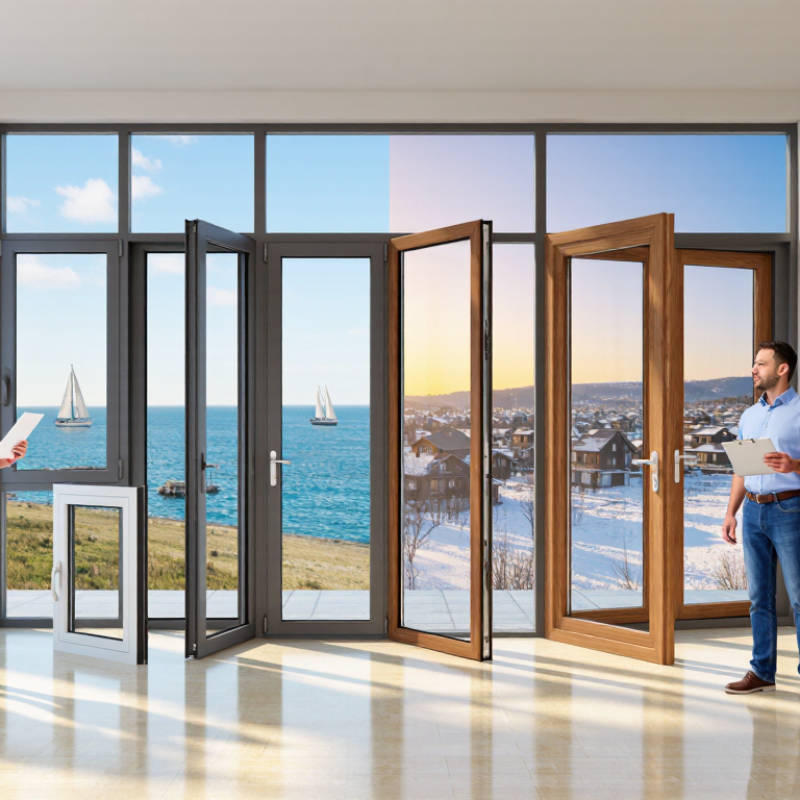
Define Project Requirements and Regional Building Conditions
Before comparing frame materials, define the project’s actual demands. Record opening sizes, wall construction, building height, window orientation, and whether occupants need ventilation or easy cleaning. Small details matter. A coastal apartment may face salt spray and wind-driven rain, while a high-altitude home can experience sharp temperature swings. ASHRAE’s 2021 Handbook—Fundamentals provides location-specific climatic design conditions that help teams assess outdoor temperatures and local exposure. Use those conditions alongside applicable project specifications, not as a substitute for them.
Energy performance also depends on climate and installation. The U.S. Department of Energy estimates that heat gain and heat loss through windows account for 25%–30% of residential heating and cooling energy use. That figure is a useful warning, not a prediction for every building. Compare glazing, frame, seals, and installation details as one assembly. Check thermal performance, air and water resistance, wind-load needs, and how the frame joins the wall. A high-performing unit can still disappoint if the sill flashing or perimeter seal is poorly detailed. Project notes often miss that interface. It deserves another look. Avoid assuming one specification will suit every export market; regional conditions and building layouts change what “fit for purpose” means.
How to Choose Integrity Windows and Doors for Global Buyers? - Define Project Requirements and Regional Building Conditions
| Requirement | Project information to define | Regional conditions to assess | Selection guidance |
|---|---|---|---|
| Building use and exposure | Building type, floor level, façade orientation, opening size, and whether the location is sheltered or exposed. | Coastal exposure, open terrain, high-rise wind exposure, nearby buildings, and local topography. | Use the project’s site-specific design loads and building-code requirements. Do not select products by appearance or nominal size alone. |
| Wind resistance | Required design pressure, window or door dimensions, frame support, anchorage, and acceptable deflection. | Local basic wind speed, building height, terrain category, and cyclone or hurricane risk where applicable. | Compare tested or engineered performance for the complete assembly, including frame, glazing, hardware, and installation details. |
| Water penetration | Expected rain exposure, drainage strategy, sill details, perimeter seals, and connection to the wall’s water-management layer. | Rainfall intensity, wind-driven rain, monsoon conditions, coastal storms, and façade exposure. | Specify a water-resistance level appropriate to the exposure and require coordinated flashing and installation details. |
| Thermal performance | Energy targets, heating and cooling strategy, window-to-wall ratio, and whether performance is specified for the whole unit. | Climate zone, seasonal temperature range, solar exposure, and local energy-code limits. | Compare whole-window U-factor and solar heat gain coefficient (SHGC), using the applicable local rating method. Lower U-factor generally means less heat transfer. |
| Glazing and safety | Insulating-glass requirements, acoustic goals, safety-glazing locations, security needs, and any fire or impact requirements. | Local safety-glazing rules, noise levels, solar intensity, storm hazards, and applicable fire-safety provisions. | Confirm glass type, thickness, spacer, edge support, and certification against the governing code and project specification. |
| Air leakage and ventilation | Air-tightness target, ventilation strategy, operable-window locations, and required acoustic or dust control. | Temperature extremes, pollution, dust, prevailing winds, and local ventilation requirements. | Specify tested air-leakage performance and coordinate operable openings with the building’s mechanical ventilation design. |
| Materials and corrosion | Frame material, finish, hardware grade, expected service life, and maintenance access. | Salt spray, humidity, industrial pollutants, UV exposure, and contact with dissimilar metals. | Choose finishes and fasteners suited to the environment; require compatible materials and a documented maintenance plan. |
| Operation and accessibility | Opening direction, clear opening, operating force, threshold height, cleaning access, and emergency-egress needs. | Local accessibility and egress rules, user needs, wind conditions, and available interior or exterior space. | Check dimensions and hardware against local accessibility, fall-protection, and emergency-exit requirements before ordering. |
| Acoustic performance | Indoor noise target, dominant noise frequency, room use, and whether ventilation openings are required. | Road, rail, aircraft, construction, or industrial noise at the site. | Request tested sound ratings for the complete assembly; glass selection alone does not determine installed acoustic performance. |
| Codes, testing, and documentation | Required standards, test reports, product declarations, warranties, and inspection or approval process. | National and local building codes, accepted test methods, import rules, and project-specific authority requirements. | Verify that reports apply to the proposed size, configuration, hardware, glazing, and installation conditions. Confirm requirements with the local design professional or authority. |
| Installation and logistics | Rough openings, tolerances, sill support, lifting access, packaging, lead time, and replacement-part availability. | Local construction practices, transport limits, site storage conditions, and the distance to service support. | Coordinate shop drawings and installation sequencing early; include protection, inspection, and handover requirements in the specification. |
Note: Performance targets and regulatory requirements vary by jurisdiction and project. Confirm final values, test methods, and approvals with the local design team and relevant authority.
Related Posts
-

What Is the Top Window and Door Store in China?
-

Best Long Windows and Doors for Global Buyers in China?
-
2026 Top Window and Door Store Types for Global Buyers?
-

Top Window and Door Store Types for Global Buyers?
-
How to Choose Windows Siding and Doors for Any Home?
-

2026 Best West Windows and Doors for Your Home Needs?
Share On: